The physics of waste and the logistics of recovery in Aurora
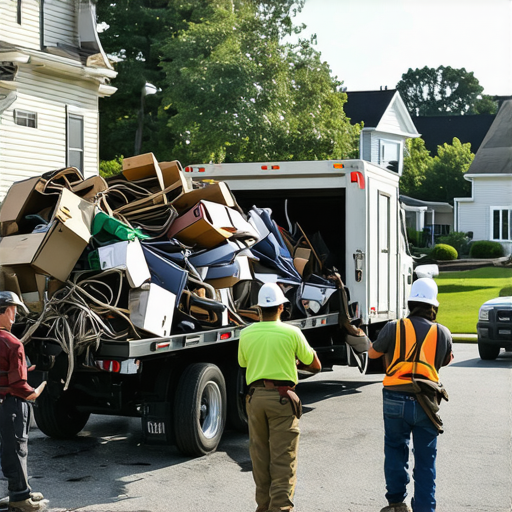
A business owner tried to save 500 dollars by hiring a guy with a pickup truck from a social media ad. Two weeks later, the police called him because his company’s confidential files were found in a ditch. Your junk is your liability until it hits the scale. This is the reality of the hauling industry in the Fox Valley. I have spent twenty five years watching trucks pull into transfer stations, and I can tell you that the difference between a professional load and a ‘curbside cowboy’ is measured in legal risk and hydraulic efficiency. In 2026, the landscape of junk removal Aurora has shifted from simple disposal to complex material recovery. We no longer just move objects from point A to point B. We manage a stream of regulated assets that require precise logistical handling. When we pull a 15 yard truck up to a driveway in Aurora, we are calculating the cubic yard density before the first gate drops. Every cubic inch of air left in that truck is lost profit and wasted carbon. We pack with the precision of a tetris grandmaster because diesel is expensive and landfill space is a vanishing commodity.
The illegal dumping trap and your liability
Junk removal Aurora services must adhere to strict Illinois EPA mandates regarding the chain of custody for all discarded materials. If a hauler dumps your old sofa or business files in a Kane County forest preserve, the authorities will trace those items back to you. The 2026 regulations have tightened the ‘cradle to grave’ responsibility for residential and commercial waste. When you hire for junk removal, you are not just paying for muscle. You are paying for a certified disposal receipt. The Orchard Road transfer station and local landfills are now using advanced scanning to detect prohibited items like lithium ion batteries or heavy metals. If your hauler is not inspecting the load, they are putting your reputation and your wallet at risk. We see it every week. A homeowner thinks they saved fifty bucks, only to receive a municipal fine that triples the original quote. Professionalism in waste management is about risk mitigation.
“Waste is merely a resource in the wrong place; professional removal is the science of putting it back where it belongs.” – Disposal Industry Maxim
The heavy cost of keeping everything
Hoarder clean out Aurora projects require a deep understanding of structural load limits and biohazard protocols. In my career, I have entered homes where the sheer mass of accumulated paper and textiles has caused the floor joists to deflect by over three inches. This is not just a cleaning job. It is a structural intervention. By 2026, the psychological and logistical approach to hoarding has evolved. We treat these sites as high density recovery zones. We look for the ‘void spaces’ and the ‘collapse zones.’ A stack of newspapers from the 1990s that has absorbed basement humidity can weigh four times its original mass. This increases the tipping fees and the physical strain on the crew. We utilize high capacity floor jacks and specialized ramps to ensure that the removal process does not compromise the integrity of the Aurora home. Every item is triaged. We separate the high BTU wood waste from the low grade plastics to maximize the diversion rate at the recycling facility.
A technical breakdown of appliance recovery
Appliance removal involves the safe extraction of refrigerants and the recovery of high value metals like copper and aluminum. A standard refrigerator from a kitchen in Aurora is not just a steel box. It is a pressurized system containing R-134a or R-600a refrigerants that must be recovered according to Section 608 of the Clean Air Act. In 2026, the fines for venting these gases have skyrocketed. Our logistics team handles the removal by securing the compressor and ensuring no leaks occur during the transit to the scrap processor. We calculate the scrap value versus the labor hours. A washing machine contains a concrete counterweight that adds eighty pounds of ‘dead weight’ to the truck. If we do not account for that weight in our load plan, we risk exceeding the gross vehicle weight rating of the truck, which leads to DOT fines. We analyze the components. We strip the wiring harnesses. We ensure that the lead acid batteries in old electronics are manifested separately.
The mathematics of dumpster volume versus weight
Dumpster rentals Aurora operate on a strict balance between volumetric capacity and weight based tipping limits. A 20 yard dumpster does not mean you can fill it with 20 yards of concrete. You will ‘top out’ the weight limit long before you fill the volume. In the Fox Valley, we see customers make this mistake constantly. They rent a bin for a bathroom remodel and fill the bottom with heavy tile and plaster. The truck arrives, attempts to lift, and the hydraulic bypass valves scream because the load is 5 tons over the legal limit. In 2026, we provide a density chart for every rental. You need to know that wet soil is 2,000 pounds per yard while loose household junk is only 250 pounds per yard. Planning your load means placing the heavy materials on the bottom and the light ‘fluff’ on top to prevent debris from flying out during transport on I-88.
| Material Type | Decomposition Time | Recovery Potential (2026) |
|---|---|---|
| Untreated Wood | 2-3 Years | High (Mulch/Biofuel) |
| Corrugated Cardboard | 3 Months | High (Pulp Reprocessing) |
| High-Density Polyethylene | 600 Years | Medium (Pelletization) |
| Gypsum Drywall | 10-15 Years | Low (Sulfur Risk) |
| Ferrous Metals | 50 Years | Maximum (Infinite Loop) |
Hidden dangers in the Fox Valley basements
Garage clean outs often reveal legacy chemicals and hazardous materials that require specialized EPA handling. We once cleared a garage near the Aurora airport that contained three barrels of ‘mystery liquid’ from the 1970s. It turned out to be old transformer oil laden with PCBs. You cannot just throw that in a dumpster. Our 2026 protocol involves a visual hazmat sweep of every garage before we touch a single shovel. We look for the ‘telltale leaks’ on the concrete. We check for pressurized cylinders. A single hidden propane tank in a junk pile can turn a garbage truck into a bomb if the compactor cycles at the wrong moment. We manage the hazardous waste stream by partnering with Kane County recycling events and certified industrial waste processors. We do not gamble with the safety of our crew or the local groundwater.
Furniture removal and the death of the fast fashion couch
Modern furniture removal is increasingly difficult because of the low grade materials and composite resins used in manufacturing. Twenty years ago, a dining table was solid oak. Today, it is mostly particle board held together with formaldehyde based glues. These items have zero structural integrity once they are disassembled. In 2026, the circular economy in Aurora demands that we identify furniture that can be refurbished. If it is high quality, we divert it to local charities or restoration shops. If it is ‘fast furniture,’ we have to treat it as low grade waste. The carbon footprint of hauling a cheap, broken sofa from a third floor apartment in downtown Aurora often outweighs the material value. We focus on the ‘load out’ efficiency. We use heavy duty straps and specialized dollies to protect the walls of the home while moving these bulky, awkward items. We minimize the ‘touches’ to maximize the speed of the job.
“Modern waste management is 10 percent lifting and 90 percent logistical data analysis.” – SWANA Technical Report
The logistics of urban junk removal Aurora
The narrow streets and high density of some Aurora neighborhoods dictate the size and type of equipment used for junk removal. You cannot fit a 40 yard roll off dumpster into a tight alleyway near the Fox River. In these scenarios, we utilize ‘live load’ trucks. We pull up, we load the items in 30 minutes, and we move on. This avoids the need for municipal street permits and prevents neighbors from throwing their own trash into your rented bin overnight. We call this ‘The Midnight Bonus’ where a dumpster doubles in weight while the homeowner sleeps. In 2026, we use GPS tracking and load sensors on all our Aurora fleets. We know exactly where your waste is and exactly how much it weighs in real time. This transparency is what the modern market demands. We are not just hauling trash. We are managing a supply chain of secondary raw materials.
Items your hauler cannot legally touch
- Industrial chemicals and unlabeled mystery liquids
- Biohazardous materials and medical sharps
- Lead-acid batteries and damaged lithium-ion cells
- Pressurized tanks including oxygen and propane
- Asbestos-containing materials from old pipe insulation
- Explosives or active ammunition
- Radioactive materials from old smoke detectors
A final word on waste to energy incineration
While most people think recycling is always better, the carbon footprint of hauling low grade plastics 500 miles often exceeds the impact of local, high efficiency waste to energy incineration. In the Aurora region, we are seeing a shift toward localized processing. By 2026, the goal is to reduce the ‘miles per ton’ of every piece of junk we remove. We analyze the proximity of the transfer station to the final destination. If we can turn your old broken wooden fence into local energy rather than trucking it to a landfill in another county, we have won the logistical war. We are committed to a zero waste future, but that future is built on the cold, hard math of hauling physics and chemical recovery. We pack the truck. We scale the load. We protect the environment one cubic yard at a time.