Why your cheap hauler is a legal time bomb
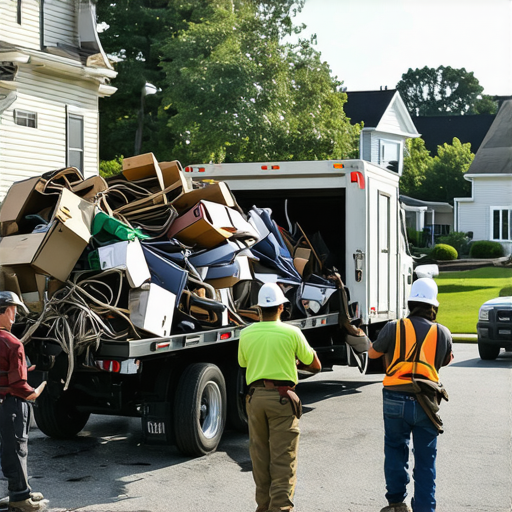
Commercial junk removal in Aurora involves the certified disposal of office furniture, electronic waste, and industrial debris through regulated transfer stations and recycling centers. A business owner tried to save 500 dollars by hiring a guy with a pickup truck from a social media ad. Two weeks later, the police called him because his company’s confidential files were found in a ditch. Your junk is your liability until it hits the scale at a certified facility. In the waste industry, we call this the chain of custody failure. When you hire an unvetted entity, you are not just getting rid of trash. You are outsourcing your reputation to someone who might prioritize avoiding a 60 dollar tipping fee over your legal safety. We see this often near the Tower Road corridor where illegal dumping costs the city thousands in remediation. True professionals provide a weight ticket and a manifest. Anything less is a gamble with the EPA.
“Waste is merely a resource in the wrong place; professional removal is the science of putting it back where it belongs.” – Disposal Industry Maxim
The physics of the fifteen yard bin
Dumpster rentals in Aurora are governed by volumetric capacity, weight limits, and local zoning permits for right of way placement. You think you are buying a container. You are actually buying a logistical solution for density. A fifteen yard bin has a specific footprint. It is exactly four point five meters long. If you load it with concrete, you will hit the weight limit long before the volume limit. This is called cubing out. For office cleanouts, the goal is air space reduction. We break down desks. We stack chairs in a nesting pattern. We maximize every cubic inch because air is the most expensive thing to transport. Every mile a half empty truck drives represents wasted diesel and unnecessary carbon emissions. Professional hauling is a game of Tetris played with high stakes and hydraulic fluid.
| Material Type | Decomposition Time | Disposal Method |
|---|---|---|
| Corrugated Cardboard | 2 Months | Fiber Recovery |
| Office Furniture (Steel) | 50 Years | Scrap Metal Smelting |
| E-Waste (Motherboards) | 1000+ Years | Chemical Extraction |
| Plastic Housing | 450 Years | Polymer Pelleting |
The hidden chemistry of old appliances
Appliance removal requires EPA Section 608 certification for refrigerant recovery and hazardous material handling of capacitor fluids. Most people see an old breakroom fridge as a heavy box. I see a pressurized system of R-134a or R-22 refrigerant. If you tip that unit incorrectly, you risk a venting violation that carries massive federal fines. Then there are the capacitors. Older units contain PCBs. These are not things you just throw in a landfill. The environmental impact of a single poorly handled compressor is equivalent to driving a car for six months. We use specialized dollies to maintain the upright integrity of the cooling loop. We evacuate the gases before the steel frame ever touches a shredder. It is a precise surgical strike on a piece of metal.
The ghost in the garage
Garage clean outs and hoarder clean out Aurora services focus on structural integrity, biohazard mitigation, and high volume sorting. I have walked into garages where the stack of newspapers was so dense it had its own microclimate. The bottom layers were fermenting. The weight was literally cracking the concrete slab. In Aurora, the fluctuating humidity levels can turn a simple pile of cardboard into a heavy, moldering mass that requires respiratory protection to move. We don’t just throw things in a bag. We triage. We look for the lithium batteries that are fire hazards. We look for the lead acid batteries that leak electrolytes. Every item is a data point in a larger recovery plan. The goal is a zero sweep. That means the floor is visible and the air is breathable.
- Lithium Ion Batteries (Fire Hazard)
- Lead Acid Automotive Batteries
- Wet Paint and Solvent Thinners
- Pressurized Propane Cylinders
- Biohazardous Medical Waste
- Fluorescent Ballasts with PCBs
The myth of the magic recycling bin
Junk removal professionals prioritize material diversion by sorting debris into ferrous metals, clean wood, and recoverable plastics. While most people think recycling is always better, the carbon footprint of hauling low grade plastics 500 miles often exceeds the impact of local, high efficiency waste to energy incineration. We look at the BTU potential. If wood waste is contaminated with lead paint, it cannot be mulched. It has to be isolated. In Aurora, our proximity to specific processing plants allows us to divert roughly sixty percent of a standard office cleanout. This includes the high value aluminum from window frames and the copper from old wiring. We are not just haulers. We are brokers of secondary materials. We find the shortest path from your floor to a processing furnace.
“Effective solid waste management is a technical necessity for urban public health and environmental preservation.” – Solid Waste Association of North America (SWANA)
The heavy cost of keeping everything
Furniture removal and commercial cleanouts leverage ergonomic lifting tools and ramped box trucks to minimize property damage. A solid oak boardroom table is a beautiful piece of history. It is also a three hundred pound liability for your lower back. We use stair climbers and pallet jacks. We protect the door frames with padded guards. Most amateur moves result in a gouged wall or a broken toe. We calculate the center of gravity before the first lift. For tech cleanouts in Aurora, this means dealing with server racks that are top heavy. You cannot just tilt them. You have to secure them with ratcheted straps. The physics of moving heavy mass requires respect for gravity. The floor snapped once because a client tried to move a safe without a steel plate. We don’t make those mistakes. We know the load limits of a standard commercial elevator. We know how to distribute the weight across the truck axle to avoid an overweight citation at the scales. Professionalism is measured in the absence of accidents.