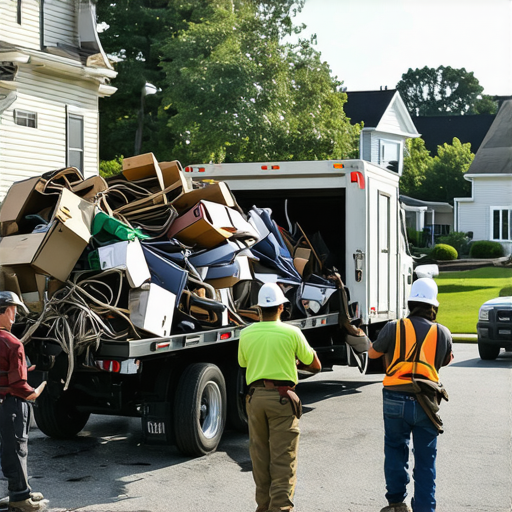
A dumpster rental in Aurora is a battle against physics and volume. You look at the pile of debris in your driveway and see a weekend of work. I look at it and see exactly 14.5 cubic yards of uncompacted municipal solid waste with a high probability of void space. Most homeowners fail the logistics test before the truck even arrives. They choose a bin based on price rather than density. This is how you end up paying for air or, worse, paying for two 10-yard bins when one 20-yard would have sufficed. The smell of diesel and hydraulic fluid is the scent of a project moving forward. Wasted space is a sin in this industry. Every cubic inch of that steel box costs money. If you leave gaps, you are literally throwing cash into a hole. A business owner once tried to save 500 dollars by hiring a guy with a pickup truck from a social media ad. Two weeks later, the police called him because his company confidential files were found in a ditch near the Cherry Creek spillway. Your junk is your liability until it hits the scale. This is the reality of waste management. Your debris needs a manifest. It needs a professional who understands that a 10-yard dumpster is not just a box but a calculated tool for specific weight limits and volumetric capacity. The floor snapped under the weight of his hubris. We see it every day. People think they can eyeball a load. They cannot.
The mathematics of spatial failure
Dumpster rentals Aurora demand an understanding of volumetric density. Most homeowners underestimate their debris by forty percent. Measuring items in cubic yards before ordering prevents the logistical nightmare of a half-full second bin. Precision in sizing keeps project budgets from exploding under unexpected tipping fees at the local transfer station. You must think in three dimensions. A cubic yard is a block of space three feet wide, three feet long, and three feet high. Picture a standard washing machine. That is roughly one cubic yard. If you have twenty washing machines worth of junk, a 10-yard bin will fail you. You need to account for the geometry of the items. Furniture does not break down flat. It leaves pockets of air. These pockets are the enemy of efficiency. We call this cubing out the load. If you hit the top rail of the dumpster before the weight limit, you have failed to pack the container properly. The logistics of a Hoarder Clean Out aurora are even more complex because the material is often degraded and loses structural integrity. It compresses under its own weight. This creates a deceptive volume profile. You think you need a 40-yarder, but once the items are crushed, they occupy 20 yards of high-density mass. This is where the science of hauling becomes an art form. You have to predict the collapse.
“Waste is merely a resource in the wrong place; professional removal is the science of putting it back where it belongs.” – Disposal Industry Maxim
The ten yard container for surgical strikes
Dumpster Rentals Aurora options usually start at the 10-yard mark. This size is for specific, heavy materials like concrete, dirt, or asphalt. It is the surgical strike of waste management. You do not use a 10-yarder for a whole house cleanout. You use it for a bathroom remodel or a small Appliance removal project. The physics of the roll-off truck dictate that heavy loads must be in smaller bins. If you fill a 30-yard bin with concrete, the truck will not be able to lift it. The hydraulic systems have limits. The street surface has limits. In Aurora, the heat of the summer can soften asphalt. A 10-yard bin filled with wet soil can weigh several tons. Placing that much weight on a driveway without wood planking is a recipe for a cracked slab. We look at the PSI, or pounds per square inch, exerted by the dumpster feet. A smaller bin allows for better weight distribution in tight residential spaces. It fits in a standard parking spot. It is the tool of choice for the Garage Clean outs where you have mostly heavy, dense items like old engines or stacks of tiles. If you are clearing out a shed, this is your bin. Do not try to pack a sofa in here. You will waste fifty percent of the volume on the sofa frame alone.
The twenty yard standard for suburban purges
Junk Removal Aurora projects typically find their home in the 20-yard dumpster. This is the workhorse of the industry. It measures approximately 20 feet long, 8 feet wide, and 3.5 feet high. The low walls make it easy to toss items over the side. This is vital for Furniture Removal because lifting a heavy oak dresser over a six-foot wall is a cardiac event waiting to happen. The 20-yarder is the sweet spot for efficiency. It handles the debris from a large basement or a mid-sized kitchen renovation. When we talk about Junk Removal, we talk about the logistics of the trip. One 20-yard trip is better than two 10-yard trips. You save on the fuel surcharge and the drop-off fee. In the Aurora market, the tipping fees are calculated by the ton. A 20-yard bin usually comes with a weight limit of 3 to 4 tons. If you exceed this, the overage charges start to bite. This is where you have to be careful with wet debris. Sheetrock acts like a sponge. If it rains on your open dumpster, that drywall will absorb hundreds of pounds of water. You are then paying the landfill to take back Aurora rainwater at 60 dollars a ton. Cover your load. It is basic logistics. We see people leave bins open during a spring storm and then wonder why their bill was 200 dollars higher than the quote. The water adds weight but zero value.
| Dumpster Size | Cubic Yard Capacity | Common Use Case | Weight Limit (Tons) | ||||||||
|---|---|---|---|---|---|---|---|---|---|---|---|
| 10 Yard | 10 Cubic Yards | Concrete, Dirt, Small Bath | 2-3 Tons | ||||||||
| 15 Yard | 15 Cubic Yards | Small Kitchen, Attic Clear | 2-3.5 Tons | 20 Yard | 20 Cubic Yards | Deck Removal, Large Garage | 3-4 Tons | 30 Yard | 30 Cubic Yards | Whole House, Major Reno | 4-5 Tons |
The thirty yard behemoth for major structural shifts
Dumpster Rentals Aurora services offer 30-yard bins for the most demanding scenarios. These bins are six feet tall. You are not throwing things over the side anymore. You are using the rear walk-in door. This is where the Tetris master earns their keep. You walk the heavy items to the front of the bin and stack them floor to ceiling. You minimize the air. If you just throw things in, the bin will be full in an hour but only weigh two tons. That is a failure of logistics. A 30-yarder is for the Hoarder Clean Out aurora where the sheer volume of material outweighs the density concerns. Think about the carbon footprint. Hauling low-grade plastics and old clothes 50 miles to a landfill in a half-empty truck is an environmental disaster. High-efficiency waste-to-energy incineration is often a better path than shipping light trash across state lines, but that requires high-density loads. The 30-yard bin is also the limit for most residential streets in Aurora. Any larger and the turning radius of the truck becomes a liability. You start hitting low-hanging tree branches or clipping the neighbor’s mailbox. The logistics of placement are as vital as the logistics of the load itself. We need 60 feet of straight-line clearance to drop a 30-yard bin. If your driveway is short, you are out of luck. You need a permit for street placement. The city of Aurora has specific rules about reflective tape and overnight parking for dumpsters. Ignore them and you get a ticket. The city does not play games with road hazards.
Forbidden cargo and the legal time bomb
Junk Removal is governed by strict environmental laws. You cannot just throw anything into a steel box and expect it to vanish. The Resource Conservation and Recovery Act defines what is hazardous. If you hide a lead-acid battery under a pile of old carpet, you are creating a fire hazard. We have seen trucks catch fire on I-225 because someone tossed a lithium-ion battery into a general waste bin. The compaction blade hits the battery, it punctures, and the truck becomes a torch. We don’t just lift; we inspect. Every. Single. Item. If we see prohibited items, we leave them on your driveway. We are not your hazmat team. We are your haulers. Appliance removal often requires the removal of refrigerants. You cannot toss a fridge into a dumpster without a certificate showing the Freon has been recovered by a licensed technician. This is not about being difficult. It is about the 25,000 dollar fine from the EPA. The logistics of disposal include the legal paper trail. When the load hits the transfer station, it is inspected again. If they find your old cans of oil-based paint, they will charge a contamination fee that makes the original rental cost look like pocket change. Knowledge is the only protection against these costs.
“The management of solid waste is a fundamental requirement for the protection of public health and the environment.” – Solid Waste Association of North America (SWANA)
- Lithium-ion and Lead-acid batteries
- Liquid paint and chemical solvents
- Refrigerants and AC units with Freon
- Propane tanks and pressurized cylinders
- Asbestos-containing materials
- Industrial tires and oversized rubber
- Biohazardous waste or medical needles
The logistics of the Aurora landscape
Junk Removal Aurora providers operate in a specific geographic reality. The proximity to the Denver Regional Landfill and various transfer stations dictates the pricing. Fuel is the largest variable cost. If you live in the far eastern reaches of Aurora, near the plains, your delivery fee might be higher. The wind is another factor. An empty 10-yard bin is a kite in a 50-mph Colorado gust. We have seen dumpsters slide across driveways and into parked cars because the wind caught the side panels. Professional haulers use wheel chocks. We check the weather. We also understand the local bulky-item pickup schedules. Sometimes, you do not need a dumpster. Sometimes the city will take it. But the city has limits. They will not take 20 yards of debris. They will take a sofa and a chair. For the Garage Clean outs, you need a private partner. You need the certainty of a dedicated container. The efficiency of a one-day purge is worth the rental fee. You reclaim your space. You stop the data overflow of physical clutter. The psychology of a clean space is tied to the logistics of the removal. Once the bin is gone, the stress is gone. But only if the bin was sized correctly. If you have a pile left over, the stress remains. It stares at you. It reminds you that you miscalculated the volume. It reminds you that you ignored the advice of the logistics manager. Do not be that person. Measure twice. Rent once. Fill it tight. Move on with your life. The hydraulic hiss of the truck pulling away is the sound of success.