Furniture Removal: How to Toss an Old Sectional in Aurora
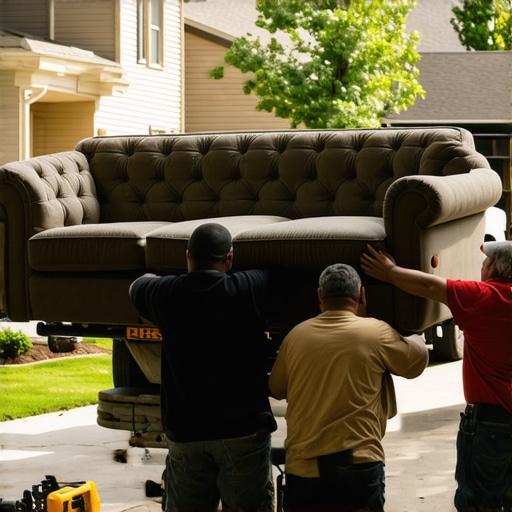
The smell of diesel and fresh hydraulic fluid is the scent of a productive morning. I have spent twenty-five years staring at the back of a fifteen-yard dump truck, solving the physical puzzle of cubic-yard density. When a homeowner in Aurora calls about an old sectional, they see a comfortable piece of furniture that has lost its luster. I see a logistical challenge that occupies approximately four to six cubic yards of premium truck space. A sectional is not just a sofa. It is a series of modular frames, sinuous springs, and polyurethane foam that must be surgically removed from a living space without destroying the drywall or the technicians’ lower backs.
The phantom weight of an old sectional
Furniture removal in Aurora requires understanding cubic yardage and structural weight limits. Sectionals are bulky items that often exceed the lifting capacity of a single person and require specialized logistics to transport to the nearest transfer station or recycling facility. The average three-piece sectional can weigh anywhere from three hundred to five hundred pounds, but the weight is not the primary enemy. The enemy is the volume. In the world of waste management, we live and die by the load. If I cannot ‘cube out’ a truck effectively, I am hauling air, and air does not pay the tipping fees at the local landfill.
A business owner tried to save five hundred dollars by hiring a guy with a pickup truck from a social media ad. Two weeks later, the police called him because his company’s confidential files and several pieces of office furniture were found in a ditch. Your junk is your liability until it hits the scale at a certified transfer station. This is the lesson every Aurora resident must learn before they trust a curbside cowboy with their disposal needs. The paper trail of a waste manifest is your only protection against environmental fines that can reach into the thousands of dollars. When we pull up to a house in Aurora for a furniture removal job, we are not just movers. We are logistics experts ensuring that every pound of material is accounted for and diverted to the correct stream.
The logistical math of the fifteen yard truck
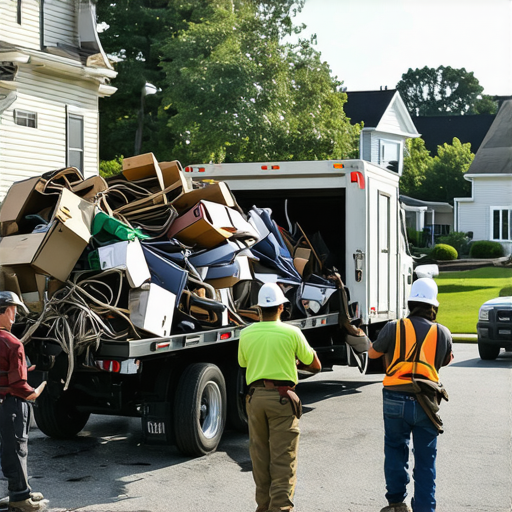
Calculating the cost of furniture removal depends on the displacement of volume within a standard dump truck. Most professional teams in Aurora use trucks that hold between twelve and fifteen cubic yards, which is roughly the size of six standard refrigerators. A sectional sofa, when left intact, is an incredibly inefficient object. It creates ‘dead air’ in the middle of the truck bed. To maximize the load, we must often dismantle the units. This involves stripping the cushions to use as ‘fill’ for gaps and stacking the frames on their ends to minimize the footprint on the truck floor. It is a high-stakes game of Tetris where the pieces weigh eighty pounds each.
“Waste is merely a resource in the wrong place; professional removal is the science of putting it back where it belongs.” – Disposal Industry Maxim
The physics of moving a sectional through an Aurora suburban doorway is a lesson in geometry. We look for the pivot point. We assess the load-bearing capacity of the stairs. If the sectional is a sleeper sofa, the complexity triples. A sleeper mechanism is a hundred-pound cage of steel springs and high-tension wires hidden inside a wooden frame. If that mechanism pops open during a descent, it can pin a technician against a wall with enough force to break ribs. We strap those units down before they even move an inch. We treat every piece of furniture as a potential kinetic energy hazard.
Why your cheap hauler is a legal time bomb
Hiring unlicensed junk removal services in Aurora creates significant legal liability for the property owner. If your waste is dumped illegally on a backroad, the fines often exceed five thousand dollars, and the original owner of the material remains legally responsible for the cleanup costs. The ‘curbside cowboy’ usually lacks the necessary insurance to cover property damage. If they drop your sectional and gouge your hardwood floors, or worse, put a hole in your siding, you have no recourse. A professional crew carries general liability and workers’ compensation. This is built into the price. You are not just paying for the haul; you are paying for the peace of mind that the liability ends the moment the truck pulls out of your driveway.
| Material Category | Average Weight (lbs) | Landfill Space (Cubic Yards) | Decomposition Time |
|---|---|---|---|
| Standard 3-Seat Sofa | 150 – 200 | 2.0 – 2.5 | 50 – 80 Years |
| L-Shaped Sectional | 300 – 450 | 4.0 – 6.0 | 60 – 100 Years |
| Sleeper Sectional | 450 – 600 | 5.0 – 7.5 | 80 – 120 Years |
| Armchair / Ottoman | 50 – 80 | 0.5 – 1.0 | 30 – 50 Years |
The decomposition times in the table above are a sobering reminder of why we push for material recovery. The polyurethane foam used in modern sectionals is a petroleum-based product. It does not simply ‘go away’ when it hits the landfill. In the anaerobic environment of a capped landfill, these materials can sit for a century. This is why our team looks for diversion opportunities. If the sectional is clean, it might go to a textile recycler. If the frame is solid wood, it could be salvaged. We look at the load and determine if it is waste or a candidate for a circular economy.
Aurora municipal limits and the curbside gamble
Municipal waste collection in Aurora often has strict limits on the size and weight of bulky items allowed at the curb. Many residents assume that because they pay taxes, the city will take anything they drag to the grass, but most local ordinances require a pre-scheduled pickup and a specific ‘bulky item’ tag. If you put a six-piece sectional on the curb without a permit, it will likely sit there until the upholstery is soaked by rain, doubling its weight and making it a breeding ground for mold and pests. At that point, the city might issue a code violation notice, and the cost of removal will go up because the material is now ‘wet waste’.
Wet waste is the bane of the junk removal industry. A dry sofa is heavy. A rain-soaked sofa is a structural nightmare. The foam acts as a giant sponge. When we encounter wet furniture during a garage clean out or a hoarder clean out in Aurora, we have to adjust our pricing because the landfill charges us by weight. A load that would have cost two hundred dollars in tipping fees can easily jump to four hundred dollars if the material is saturated. We tell our clients: if you are going to toss it, do it while it is dry. Do not let it sit under a tarp that will eventually leak. The logistics of disposal are always cheaper when the material is manageable.
The heavy cost of keeping everything
Hoarder clean outs in Aurora represent the most extreme end of the waste management spectrum. In these scenarios, the sectional is often buried under layers of secondary waste, creating a situation where the floor joists may be compromised by the sheer tonnage of accumulated material. We have entered homes where the weight of the junk has caused the floor to bow by several inches. In these cases, we do not just walk in and start grabbing cushions. We perform a structural assessment. We look for ‘paths of egress’ and ensure that our team has a clear exit if the load shifts.
- Items Your Hauler Cannot Legally Touch:
- Lead-acid batteries (found in power recliners).
- Propane tanks (often hidden in garage piles).
- Wet paint or volatile chemicals.
- Industrial solvents and degreasers.
- Asbestos-containing materials (found in old flooring).
- Tires (require specialized recycling fees).
- Biohazardous waste.
“The Resource Conservation and Recovery Act (RCRA) dictates how we handle hazardous materials; ignoring these rules is not just unprofessional, it is a federal offense.” – Solid Waste Association of North America (SWANA)
The chemistry of the sectional disposal
The internal components of a sectional are a mix of organic and inorganic chemistry. The frames are often made of Oriented Strand Board (OSB) which uses resins containing formaldehyde. The foam is treated with flame retardants. When these items are crushed in the back of a truck, they release dust and particles that require our team to wear high-grade PPE. We are not just lifting wood and fabric. We are managing a chemical footprint. In Aurora, we follow the strict guidelines of the local transfer stations which often separate ‘clean wood’ from ‘treated furniture’ to ensure the incineration process is as efficient as possible.
Appliance removal and furniture removal go hand in hand during a garage clean out. People often keep an old sectional next to a defunct freezer. The freezer contains refrigerants like Freon which must be recovered by a certified technician before the metal can be scrapped. This is the ‘backdoor’ logistics that the average person never sees. We coordinate the recovery of these gases while simultaneously managing the physical removal of the furniture. It is a multi-step process designed to minimize the environmental impact. The goal is always the same: leave the space empty and the environment protected.
Choosing between dumpster rentals and full service
Dumpster rentals in Aurora are the ideal choice for long-term projects like a DIY home renovation or a slow garage clean out. If you have the strength to load the heavy items yourself and the space to park a twenty-yard container, a rental provides flexibility. However, for a single item like a sectional, a full-service junk removal team is usually more cost-effective. You are paying for the labor, the truck, and the disposal fees in one lump sum, rather than paying for a giant steel box to sit on your driveway for a week while you wait for a permit to clear. For most Aurora homeowners, the ‘live-load’ method is the fastest way to reclaim their square footage.
This detailed post really highlights how much planning and expertise goes into professional furniture removal, especially in a place like Aurora with its specific regulations. I’ve dealt with a similar situation when trying to dispose of an old sectional in my previous home. Dismantling the sofa myself seemed straightforward, but I quickly realized the volume and weight could easily overwhelm a typical pickup truck. Plus, the importance of following local disposal rules to avoid fines and environmental harm can’t be overstated. I also appreciate the mention of chemical components like formaldehyde in OSB and flame retardants—these are often overlooked but crucial in responsible disposal. Has anyone here found effective ways to dismantle a sectional efficiently without damaging the parts or risking injury? I wonder if there are particular tools or techniques that make pulling apart modular furniture safer and quicker, especially for those not used to heavy lifting or handling hazardous materials.