The deceptive reality of post-move debris
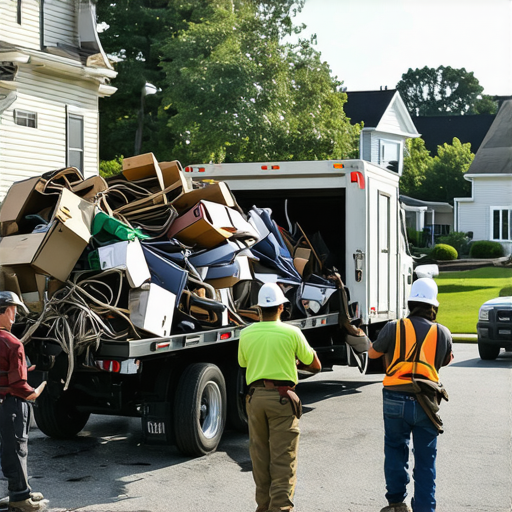
Junk Removal Aurora services provide the most efficient solution for clearing move-in boxes by utilizing high-volume logistical planning and professional-grade compaction techniques. Expert haulers analyze the cubic-yard density of your cardboard waste to optimize truck space, ensuring that every load maximizes diversion rates and minimizes environmental impact within the local Aurora waste stream.
A business owner tried to save €500 by hiring a guy with a pickup truck from a social media ad. Two weeks later, the police called him because his company’s confidential files were found in a ditch. Your junk is your liability until it hits the scale. This reality defines the high-stakes world of waste management. I have seen the fallout of shortcut disposal more times than I care to count. It starts with a simple pile of boxes. It ends with a fine that triples the cost of a professional haul. When you look at a garage full of move-in debris, you see cardboard. I see a logistical puzzle requiring precise execution. I see potential fire hazards. I see the ‘curbside cowboy’ waiting to dump your history in a creek near Cherry Creek State Park. We do things differently because the law and the environment demand it.
“Waste is merely a resource in the wrong place; professional removal is the science of putting it back where it belongs.” – Disposal Industry Maxim
The physics of the flattened cube
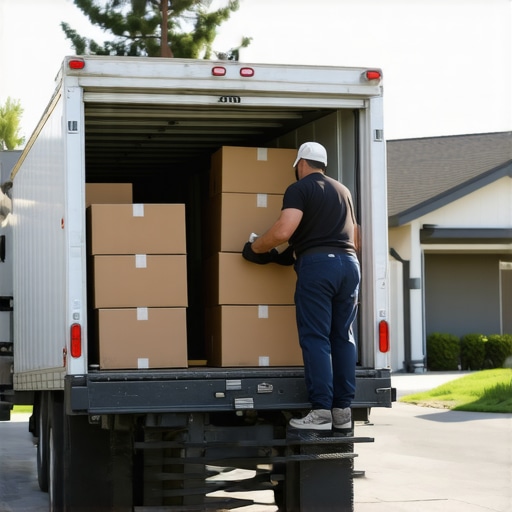
Managing leftover boxes requires understanding the structural integrity of corrugated fiberboard and the volumetric efficiency of a fifteen-yard truck. Professional Junk Removal Aurora teams do not just throw boxes into a bin. They dismantle the structural bonds of the cardboard to eliminate ‘air gaps’ that waste precious cargo space.
The engineering of a standard moving box is a feat of modern packaging. Double-walled corrugated fiberboard is designed to withstand vertical compression, which is great for your dishes but a nightmare for a waste truck. If you do not break down these boxes, you are paying to haul Aurora air. A standard medium moving box occupies approximately 3 cubic feet. When intact, 100 boxes take up 300 cubic feet. That is over 11 cubic yards. When properly flattened and bundled, that same volume drops by 85 percent. We calculate the ‘cubing out’ point of our trucks before we even pull into your driveway. We look at the lignin content of the pulp. High-quality virgin fiber boxes are stiffer. They resist compaction. Recycled fiber boxes are softer but take up more mass when wet. If your garage has any humidity, that cardboard is absorbing moisture. It becomes a heavy, soggy liability that can weigh three times its dry mass. We track this. We account for it.
| Disposal Method | Volume Efficiency | Labor Intensity | Environmental Impact |
|---|---|---|---|
| Residential Curb Pickup | Low (15%) | High (DIY) | Moderate |
| Professional Hauling | Maximum (95%) | Zero (Professional) | Low (High Diversion) |
| Dumpster Rental | Variable | Moderate | Moderate |
Why your recycling bin is a logistical failure
Standard municipal recycling bins in Aurora are insufficient for post-move debris because they lack the capacity for high-volume corrugated fiberboard. Excessive cardboard placement often leads to ‘bridging’ where material wedges inside the container, preventing the mechanical arm of the truck from successfully emptying the contents during weekly cycles.
The blue bin is a suggestion, not a solution for a whole-house move. When you cram thirty boxes into a 96-gallon cart, you create a structural arch. The truck tips the bin. The cardboard stays put. The driver moves on. Now you have a full bin and a garage still overflowing with debris. This is where Dumpster Rentals Aurora or a dedicated junk removal team becomes a mathematical necessity. We look at the ‘bursting strength’ of your boxes. If you used heavy-duty wardrobe boxes, those are built to survive a drop from a loading dock. They will not compress under their own weight in a bin. We use industrial shears and strategic folding to ensure that every square inch of our truck bed is occupied by solid material. We despise wasted space. Wasted space is wasted fuel. Wasted fuel is an unnecessary carbon footprint on the Aurora landscape. We aim for a diversion rate of 90 percent. That means that cardboard does not see a landfill. It goes to a pulp mill where the fibers are stripped, cleaned, and pressed into new life.
The heavy cost of keeping everything
Hoarder Clean Out Aurora services reveal that retained moving boxes frequently become the foundational layer of long-term residential clutter. Professional removal prevents the transition from ‘temporary storage’ to ‘permanent hoarding’ by breaking the psychological and physical cycle of keeping unnecessary packaging materials in the home.
Cardboard is a biological magnet. It is made of organic material. It is porous. It traps pheromones. If you leave a stack of boxes in an Aurora basement, you are building a hotel for Blattodea. Roaches love the glue used in box seams. It is a starch-based adhesive. It is a buffet for pests. I have cleared garages where the boxes were so infested they were literally vibrating. This is why Garage Clean outs must be immediate. You cannot wait six months to ‘see if you need the boxes.’ You do not need them. You need your space back. The structural load of cardboard is also a factor. A stack of flattened boxes five feet high exerts significant pressure on your floor joists if left in a concentrated area. If that cardboard gets damp from a minor pipe leak, the weight doubles. The mold risk skyrockets. We treat every box removal as a biological sweep. We inspect for silverfish. We check for moisture. We ensure that when we leave, your air quality is higher than when we arrived.
The hidden dangers of unvetted haulers
Furniture Removal and general junk hauling involve significant liability risks that ‘curbside cowboys’ cannot cover. Professional Aurora teams carry comprehensive insurance and adhere to the Resource Conservation and Recovery Act (RCRA) to protect homeowners from the legal consequences of improper waste disposal and illegal dumping.
“Integrated waste management represents the technical bridge between consumer excess and environmental stability.” – SWANA Technical Bulletin
The guy with the rusted trailer is not your friend. He is a walking lawsuit. If he strains his back on your stairs during an Appliance removal, your homeowner’s insurance is on the hook. If he dumps your old microwave in a ditch, the serial number leads back to you. The EPA does not care that you paid someone else to take it. The manifest must be clear. We provide a chain of custody for your waste. This is especially true for E-waste and appliances. Modern refrigerators contain high-pressure refrigerants. Older models contain chlorofluorocarbons. These are high-potency greenhouse gases. If a ‘cowboy’ cuts the line to get the copper, those gases hit the atmosphere. We use EPA-certified recovery systems. We evacuate the gas. We recycle the steel. We handle the capacitors. We do the work so you do not have a legal nightmare waiting in your mailbox.
- Lithium-ion batteries (Fire hazard in trucks)
- Pressurized cylinders (Propane, Oxygen)
- Wet lead-acid batteries (Corrosive leakage)
- Unidentified liquid chemicals (Biohazard risk)
- Bio-medical waste (Sharps and infectious material)
The logistical math of Aurora disposal
Junk Removal Aurora pricing is determined by the intersection of volume, weight, and distance to the nearest transfer station. By calculating the exact cubic yardage of your move-in boxes, professional teams provide transparent estimates that reflect the true cost of sorting, hauling, and tipping fees.
We operate on a grid. We know the traffic patterns on I-225. We know the tipping fees at the Denver Arapahoe Disposal Site (DADS). We know that a fifteen-yard load of cardboard is light on weight but high on volume. We balance our routes to ensure we are not running ‘deadhead’ miles. If we pick up a heavy load of Furniture Removal in one neighborhood, we try to follow it with a high-volume, low-weight box clear-out. This is how we keep prices stable. The physics of the truck dictate the cost. A hydraulic lift uses fuel. A full load affects braking distance. We train our drivers in ‘load stabilization.’ A shifting pile of boxes in the back of a truck is a safety hazard. We use tarps. We use straps. We treat your trash like it is cargo because, until it is processed, it is our responsibility. We look at the BTU potential of the wood waste we recover. We look at the grade of the cardboard. High-grade corrugated (OCC) has a different market value than mixed paper. We pass those savings to the customer who understands that quality service is an investment in their property value.