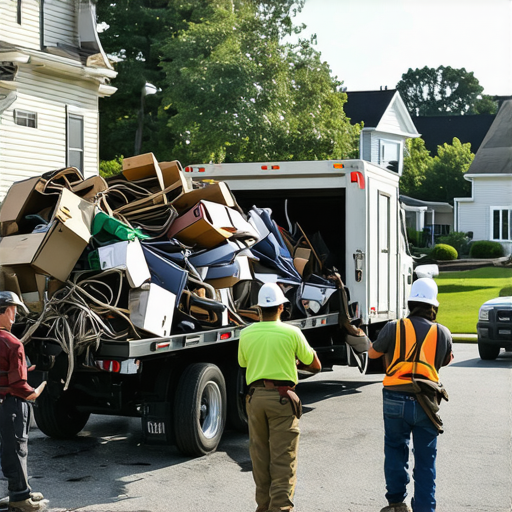

The phantom liability of a cheap pickup truck
Aurora waste management strategies for 2026 prioritize landfill diversion through rigorous material recovery and professional accountability to prevent environmental degradation. A business owner in the I-225 corridor tried to save 500 dollars by hiring a guy with a pickup truck from a social media ad to handle a warehouse purge. Two weeks later, the Aurora Police Department called him because his company sensitive files and several lead-acid batteries were found in a ditch near Cherry Creek State Park. Your junk is your legal liability until it hits the scale at a certified transfer station and receives a weight ticket. The curbside cowboys do not care about your reputation or the Resource Conservation and Recovery Act. They care about the cash. When you hire professional Junk Removal Aurora services, you are buying a chain of custody. You are ensuring that the four tons of debris from your office renovation do not end up as a headline or an environmental fine. I have seen the fallout of these shortcuts for twenty five years. The smell of diesel and hydraulic fluid is the smell of a job done right. It is the smell of a 15 yard bin being loaded with mathematical precision to ensure not a single cubic inch of air is wasted. We call this cubing out the truck. It is the difference between a profitable, ethical haul and a logistical failure that ends in a ditch.
“Waste is merely a resource in the wrong place; professional removal is the science of putting it back where it belongs.” – Disposal Industry Maxim
The physics of the fifteen yard bin
Professional dumpster rentals Aurora rely on precise volumetric calculations to maximize transport efficiency and minimize the carbon footprint of every haul to the Denver Arapahoe Disposal Site. The truck idles at the curb. The outriggers deploy. You see a pile of trash. I see a puzzle of density and weight distribution. If we load a 15 yard dumpster with nothing but old drywall, we hit the weight limit long before we hit the volume limit. This is the heavy load reality of Junk Removal. We must balance the load. We place the heavy, inert materials like concrete or old ceramic tile at the bottom to maintain a low center of gravity. Then comes the Furniture Removal. We break down the particle board desks because they are mostly air and glue. Modern furniture is a plague of disposable design. It lacks the structural integrity of mid-century hardwoods. It shatters into sharp, laminated shards that can puncture a hydraulic hose if you are not careful. We pack the gaps with soft goods. This is the tetris of the waste industry. Every gap in the load is wasted fuel. Every poorly distributed bin is a safety hazard on E-Colfax Avenue. We calculate the tare weight of the vehicle against the gross vehicle weight rating to stay legal at the scales. The DOT does not play games with overweight haulers.
The hidden chemistry of furniture removal
Furniture removal involves more than heavy lifting as modern upholstery contains complex polymers and flame retardants that require specialized disposal pathways to avoid groundwater contamination. That old sofa in your basement is a chemical time bomb. It is packed with polyurethane foam that has been off-gassing for a decade. When it hits a landfill, it does not just sit there. It breaks down into microplastics. This is why we prioritize diversion to specialized recyclers who can strip the textiles and melt the foam for carpet padding. We see the same issue with Appliance removal. An old refrigerator is not just metal. It is a pressurized system of refrigerants like R-22 or R-134a. If a rookie hacks the lines to get the copper, they release gases that are thousands of times more potent than carbon dioxide in terms of global warming potential. We use recovery cylinders. We document the evacuation. The 2026 Aurora Landfill Diversion goals require us to track these materials with surgical precision. We are no longer just haulers. We are materials recovery specialists. We look for the BTU potential in reclaimed wood. We look for the scrap value in the aluminum coils. We look for the second life in every item we touch.
The logistical nightmare of a full house clearing
A hoarder clean out Aurora represents a significant logistical challenge that involves biohazard assessment, structural load calculations, and intense manual labor. I once cleared a house where the junk was not just stuff. It was a structural hazard. We found the floor joists were bowing under the weight of 40 years of newspapers that had absorbed ten years of basement humidity. Every stack of paper was a brick of water-logged cellulose. The air was thick with the scent of mold and old ink. In these situations, we do not just start throwing things in a bin. We have to brace the floors. We have to use respirators. We have to sort on-site because a single leaking gallon of old motor oil in the middle of a paper stack can turn a recyclable load into hazardous waste. This is the data overflow of physical space. It is a system failure of consumption. We tackle it in zones. We create a backdoor logistics plan to move the mass without blowing out the homeowner’s driveway. We use plywood sheets to distribute the weight of the dumpsters. We protect the property because the goal is restoration, not just destruction. The math of a hoarder house is brutal. You are often looking at 30 to 50 tons of material in a standard 1,500 square foot bungalow. That is three dozen trips for a guy with a pickup truck. It is two days of work for a professional crew with the right rigs.
| Material Type | Disposal Method | Diversion Potential | Decomposition Time |
|---|---|---|---|
| Untreated Timber | Mulching/Biomass | 95% | 10-15 Years |
| Polyurethane Foam | Chemical Recycling | 40% | Over 500 Years |
| Corrugated Cardboard | Pulp Processing | 100% | 2-5 Months |
| E-Waste (Circuit Boards) | Smelting/Recovery | 85% | Never |
| Asphalt Shingles | Paving Additives | 70% | 300 Years |
Items the law forbids us to touch
Legal constraints and environmental safety regulations prevent standard junk removal services from handling specific hazardous materials that require specialized hazmat certification. While we handle almost any Garage Clean outs or basement purges, the law is clear about what cannot go in a standard bin. You cannot hide these items. If a load is rejected at the transfer station because you tucked a car battery under a pile of old blankets, the entire load is treated as hazardous. This triples the cost. We inspect every pile. We look for the signs of old chemicals and unstable materials. We are the first line of defense for the local water table.
- Lead-acid batteries and lithium-ion power cells
- Wet paint, solvents, and industrial thinners
- Propane tanks and pressurized cylinders
- Asbestos-containing materials (insulation, floor tiles)
- Biohazardous waste and medical sharps
- Pesticides and concentrated fertilizers
- Fluorescent light ballasts containing PCBs
“Environmental stewardship in the waste sector is not an option; it is a regulatory mandate that protects our future soil quality.” – SWANA Technical Report
The appliance graveyard and the ozone layer
Proper appliance removal is a cornerstone of Aurora eco-friendly initiatives because it prevents the release of ozone-depleting substances and captures valuable metals for the circular economy. The white goods market is a major part of our daily operation. We pull stoves, washers, and dryers out of narrow basement stairwells that were never designed for modern dimensions. The physics of moving a 400 pound cast iron radiator or a 1970s chest freezer requires more than muscle. It requires leverage and specialized dollies that do not mar the hardwood floors. Once these items are on the truck, they go to a scrap processor. The steel is shredded. The copper is harvested. We are diverted from the landfill because metal is a permanent resource. It can be melted and reformed infinitely. The carbon footprint of recycling aluminum is 95 percent lower than mining new bauxite. When you choose a professional for your Garage Clean outs, you are participating in this global resource cycle. You are making sure that your old dryer becomes part of a new bridge or a new car instead of rusting in a hole in the ground for three centuries.
The heavy cost of keeping everything
Hoarding and extreme clutter create physical risks including increased fire loads and structural strain that necessitate professional intervention for safe removal. The mental weight of clutter is often matched by the physical weight on the building structure. I have seen porches collapse under the weight of accumulated junk. The cost of Junk Removal is a fraction of the cost of a structural repair or a fire that cannot be fought because the hallways are blocked. In Aurora, the dry climate makes old paper and wood piles a significant fire risk. We work with families to navigate the emotional and physical hurdles of a Hoarder Clean Out aurora. We provide the muscle and the logistics so they can focus on the recovery. We bring the 20 yard bins. We bring the heavy duty bags. We bring the experience of knowing what can be saved and what is a biohazard. While most people think recycling is always better, the carbon footprint of hauling low-grade plastics 500 miles often exceeds the impact of local, high-efficiency waste-to-energy incineration. We make those calls based on current market realities and local Aurora ordinances. We are the strategists of the discard. We are the engineers of the clean slate.