Residential Junk Removal: Aurora Basement Flood Cleanup 2026
I watched a rookie almost lose his eyebrows because a customer hid a half-full propane tank inside a pile of yard waste. We do not just lift, we inspect. Every. Single. Item. The smell of diesel and hydraulic fluid defined that morning in Aurora. The basement was not just full of stuff, it was a pressurized tomb of waterlogged regret. When the Fox River breached its banks in 2026, the local residential junk removal industry shifted from simple hauling to a high-stakes logistical operation. This is the reality of waste management in a crisis. Your junk is your liability until it hits the scale at a certified transfer station.
The hazardous surprise that almost cost a technician his life
Hazardous materials like hidden propane tanks, lead-acid batteries, and volatile chemicals represent the primary safety risks during junk removal Aurora operations. Professional haulers must exercise meticulous inspection protocols to prevent explosions, chemical burns, and environmental contamination. Disposal safety depends on technician training and hazardous waste identification. The floor snapped. We were pulling a heavy refrigerator out of a flooded basement in the West Aurora district when the floor joists, softened by three days of immersion, gave way. The weight was not just the appliance, it was the mud, the mold, and the trapped river water. We find that homeowners often try to hide liquid waste in the bottom of garbage bins to save on tipping fees. This is a violation of the Resource Conservation and Recovery Act. It is also a fast way to get a crew injured. We do not play games with safety. If a load looks suspicious, we scan it with thermal sensors and gas sniffers.
“Waste is merely a resource in the wrong place; professional removal is the science of putting it back where it belongs.” – Disposal Industry Maxim
Toxic sludge and the 2026 Aurora basement disaster
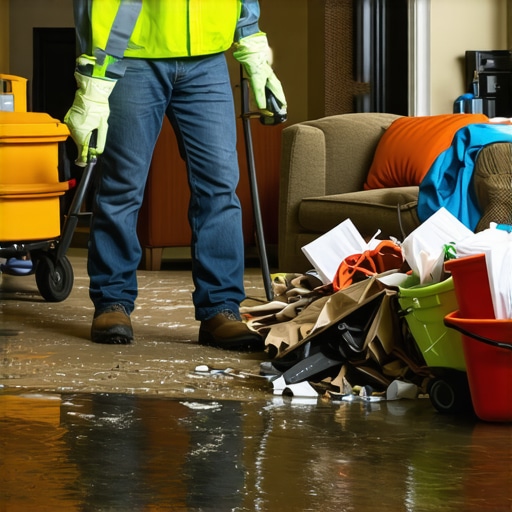
Aurora basement flood cleanup involves the extraction of biohazardous materials, saturated carpeting, and water-damaged furniture. These items harbor pathogens and mold spores, requiring specialized hauling and personal protective equipment. Flood debris removal is a logistical challenge that demands rapid response and sanitary disposal. The density of wet drywall is staggering. A standard sheet of drywall weighs about 50 pounds. When saturated, that weight triples. In a typical Aurora basement, you might have 500 square feet of wall. That is 1,500 pounds of material that is now a breeding ground for black mold. We manage the removal by calculating the cubic yardage against the gross vehicle weight rating of our 15-yard trucks. If we overfill, we risk a hydraulic failure or a roadside fine from the Illinois Department of Transportation. We do not just toss items in. We cube out the truck. We pack the heavy stuff at the bottom, tight against the bulkhead, to maintain a low center of gravity. This is the tetris of the waste world.
Weight limits and the physics of the fifteen yard truck
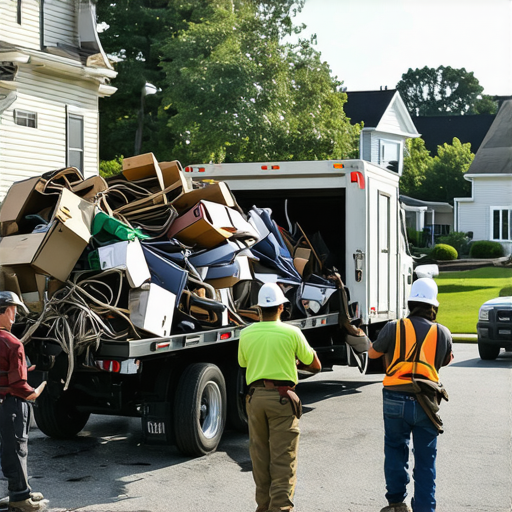
Dumpster rentals Aurora and junk removal trucks operate under strict weight capacities and volumetric limits. Logistics managers calculate load density to optimize fuel efficiency and tipping fee costs. Safe hauling requires proper weight distribution and secure containment of residential debris and heavy appliances. A 15-yard truck is the workhorse of the Aurora fleet. It can carry about 2 to 3 tons of debris before the suspension starts to groan. In a basement flood cleanup, we often hit the weight limit before the volume limit. This is called weighing out. We track every pound. If we are hauling appliance removal items like old washing machines, we have to account for the concrete counterweights inside them. A modern front-loader washer has a 100-pound block of concrete inside to keep it from walking during the spin cycle. That is 100 pounds of dead weight that does not look like much but eats into our payload capacity. We use steel ramps and motorized dollies because your lower back is not a replaceable part.
| Debris Type | Weight per Cubic Yard (Wet) | Disposal Priority | Recycling Potential |
|---|---|---|---|
| Saturated Drywall | 1,200 lbs | High (Mold Risk) | Low |
| Waterlogged Carpet | 800 lbs | Critical | Zero |
| Old Appliances | 300 lbs | Medium | High (Scrap Metal) |
| Solid Wood Furniture | 400 lbs | Low | Medium (Mulch) |
| Mixed Household Junk | 600 lbs | Medium | Variable |
Why your cheap neighborhood hauler is a legal trap
Illegal dumping and unlicensed junk removal services create legal liabilities for Aurora property owners. Certified waste management companies provide disposal receipts and insurance coverage, protecting residential customers from fines and environmental lawsuits. Professional hauling ensures ethical disposal at permitted landfills. I have seen the police knock on doors in the Fox Valley because a homeowner hired a guy with a pickup truck from a social media ad. That guy took the money, drove three miles, and dumped the basement contents into a local creek. Because the homeowner’s mail was in that junk, the homeowner was the one who got the ticket. Your junk is your legal responsibility until it is processed at a facility like the Orchard Hills Landfill. We provide a paper trail. We provide peace of mind. We are the buffer between you and the EPA regulations that govern solid waste disposal in Illinois.
The hidden chemistry of appliance removal and e-waste
Appliance removal and e-waste disposal require compliance with environmental laws regarding refrigerant recovery and heavy metal management. Aurora junk removal specialists must handle refrigerators, televisions, and computers as regulated waste to prevent toxic leaks. Certified recycling is the only safe disposal method. Every refrigerator contains a compressor and refrigerant. If you just crush it, you release CFCs or HFCs into the atmosphere. This is a federal offense. We strip the units, recover the gas, and then send the shell to a scrap yard. The same goes for furniture removal of modern pieces. That sofa you bought at a big box store is mostly particle board held together by formaldehyde resins. When it gets wet in a flood, it starts off-gassing. It becomes a chemical hazard. We do not just haul it, we contain it. We use heavy-duty poly sheeting to wrap contaminated items before they move through your living room. We protect your air quality while we clear your floor space.
- Lead-acid batteries (Fire and acid hazard)
- Propane tanks and pressurized cylinders
- Industrial solvents and thinners
- Medical waste or bio-fluids
- Ammunition or explosives
- Unlabeled liquid chemicals
Structural integrity risks during hoarder clean out aurora projects
Hoarder clean out Aurora operations present structural risks due to excessive floor loading and obstructed exits. Professional cleanouts require structural assessment and logistical planning to ensure crew safety and building stability. Deep cleaning and debris removal restore property safety. In a hoarding situation, the junk acts like a sponge. In the 2026 floods, many of these homes became death traps. The sheer volume of paper and fabric absorbed thousands of gallons of water. A house is designed to hold about 40 pounds per square foot of live load. A saturated hoarding pile can exceed 200 pounds per square foot. We have had to use shoring jacks in basements just to safely walk on the floor above. We use the backdoor logistics method, clearing paths to exits first and working from the top down. We do not just move piles, we disassemble the hoarded environment with the precision of a surgical team.
“Waste management is the thin line between a functional city and a public health crisis.” – Solid Waste Association Perspective
A definitive guide to Aurora landfill regulations and tipping fees
Aurora landfill regulations dictate tipping fees based on waste classification and load weight. Waste management professionals navigate municipal codes and state laws to ensure cost-effective disposal. Efficient junk removal minimizes landfill impact through sorting and recycling. The tipping fees in the Fox Valley area are rising. Every year, the cost per ton goes up as landfill space shrinks. We combat this by sorting on-site. We separate the metal, the clean wood, and the masonry. If we can divert 30 percent of a load to a recycler, we save the customer money and we save the planet some stress. We know the hours of every transfer station from Batavia to Montgomery. We know which ones take tires and which ones will reject a load because of a single stray paint can. This local knowledge is what you pay for. You are not just paying for a strong back, you are paying for a strategist who knows how to navigate the complex world of Illinois waste laws.
The final manifest of the 2026 flood recovery
The trucks are washed. The hydraulic lines are checked. The manifests are filed. Recovering from a basement flood in Aurora is a marathon, not a sprint. It requires an obsession with the physics of the load and a deep respect for the environment. When the next storm comes, do not trust your property to an amateur. Trust the person who knows the smell of a dangerous load and the math of a 15-yard truck. We clear the space so you can breathe again. Your basement is not just a room, it is the foundation of your home. Keep it clean. Keep it safe. Keep it professional. The logistics of disposal are cold and hard, but the results are a fresh start for a family that has lost everything to the water. We are the ones who take the mess away and make sure it never comes back to haunt you in a legal or environmental way. The work is heavy, but the purpose is clear.
This post really highlights how complex residential flood cleanup can be, especially with the added risks of hazardous materials and structural integrity concerns. I work in disaster response, and one thing I’ve seen is how important it is for homeowners to hire licensed professionals who understand both the environmental and safety regulations. In my experience, subpar cleanup can leave unseen hazards behind, leading to long-term health issues and legal issues. I’m curious, how do local regulations adapt in densely populated areas where space and disposal options might be limited? Also, what are some best practices homeowners can follow to minimize risks if they experience basement flooding before professionals arrive? It’s clear that proper planning and knowledgeable handling make all the difference in recovery efforts.