The shadow economy of illegal disposal
Eco-friendly furniture removal in Aurora involves a documented chain of custody where sofas and chairs are diverted from landfills to specialized recycling facilities that strip textiles and metal. This process prevents the release of flame retardants into the local groundwater and ensures that steel components return to the manufacturing cycle. Your old couch is a complex assembly of high-density polyethylene, polyurethane foam, and treated timber that requires professional deconstruction. A business owner tried to save 500 dollars by hiring a guy with a pickup truck from a social media ad. Two weeks later, the police called him because his company’s confidential files and several broken office chairs were found in a ditch. Your junk is your liability until it hits the scale at a licensed transfer station. I have seen the legal fallout when a low-cost hauler dumps a load on the side of a rural road near the Oak Ridges Moraine. The environmental fines and the damage to a reputation far outweigh the modest cost of a certified Junk Removal Aurora service. We operate with hydraulic precision and a deep understanding of the Resource Conservation and Recovery Act standards. Every load is a puzzle of weight distribution and material classification. We do not just toss items into a bin. We cube out the truck to minimize the carbon footprint of the trip to the Bloomington Road transfer station. This is the science of waste management.
“Waste is merely a resource in the wrong place; professional removal is the science of putting it back where it belongs.” – Disposal Industry Maxim
The chemistry of a discarded sofa
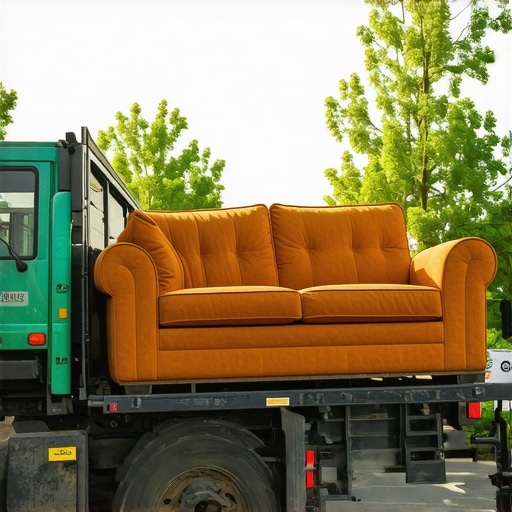
Modern furniture contains polyurethane foam and polybrominated diphenyl ethers that pose a significant environmental hazard if left to rot in an unlined pit. When these materials sit in a landfill, they break down into microplastics and chemical leachates that can migrate into the soil. In Aurora, the focus is on breaking these items down into their base components. The wooden frames are often made of engineered wood held together by formaldehyde resins. If we incinerate these in a low-temp environment, they release toxins. Instead, we aim for high-efficiency waste-to-energy facilities if the wood cannot be reclaimed. The steel springs are 100 percent recyclable. We strip them out using heavy-duty cutters. The fabric is the hardest part. Most upholstery is a blend of natural and synthetic fibers that are difficult to separate. However, specialized textile recyclers in the York Region can sometimes process these into industrial rags or insulation batting. Every couch removed represents a logistical battle against permanent waste. We track the diversion rates of every garage clean out we perform. This ensures that the 15-yard truck is not just a delivery vehicle to the dump but a mobile sorting center. We look for density and material purity. If a couch is solid oak, it goes to a different pile than a particle-board dresser. This level of detail is what separates a professional strategist from a guy with a trailer.
Physics of the fifteen yard load
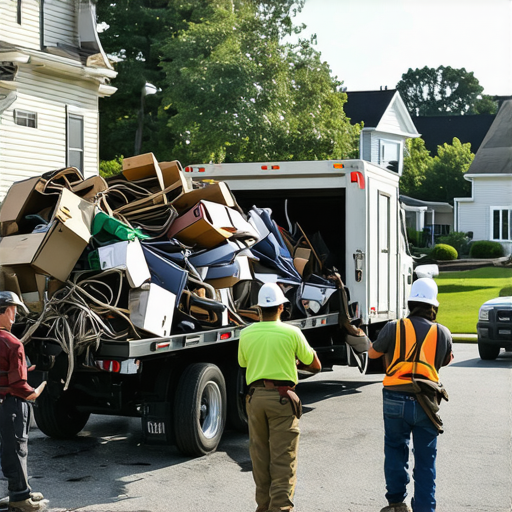
Maximizing truck volume through cubic-yard density analysis is the only way to make furniture removal economically viable while maintaining high environmental standards. Every inch of air in a junk truck is lost profit and wasted fuel. We use the tetris method of loading. We place heavy, flat items like headboards and table tops against the walls. We then stack the soft goods like mattresses and couch cushions to fill the gaps. This prevents shifting during transit through the winding streets of Aurora. The physics of the load also involves the structural limits of the residential driveway. A 20-yard dumpster rental Aurora might seem like a good idea, but a heavy load of shingles or wet furniture can crack a standard asphalt pad if the weight is not distributed on wooden planks. We calculate the point-load of every dumpster we drop. We also consider the hydraulic pressure required to lift a full load of old appliances. Refrigerators are the heaviest per cubic foot because of the compressor and the steel casing. We never mix heavy inert waste like concrete with light bulky waste like furniture. It ruins the sorting process at the transfer station. The math of hauling is simple but unforgiving. You either manage the volume or the volume manages you. I have seen trucks tip because a rookie loaded all the heavy appliances on one side. Balance is mandatory.
| Material Type | Decomposition Time (Years) | Recovery Rate (%) | Disposal Difficulty |
|---|---|---|---|
| Steel Springs | 50 | 98 | Low |
| Untreated Pine | 15 | 85 | Medium |
| Polyurethane Foam | 1000 | 15 | High |
| Polyester Fabric | 200 | 10 | Very High |
| Engineered Wood | 50 | 0 | Medium |
The heavy cost of keeping everything
Hoarder clean out Aurora projects require a tactical approach to structural load limits and biohazard identification to ensure the safety of the crew and the property. When a home is packed from floor to ceiling, the weight on the floor joists can be three times the intended design capacity. I once cleared a house where the newspapers had absorbed so much moisture they had become a solid mass of cellulose that weighed as much as concrete. The floors were bowing. We had to shore up the basement before we could even begin the removal. This is not just junk. This is a structural liability. In a furniture removal context, hoarding situations often hide the fact that the items at the bottom of the pile have been crushed and are no longer recyclable. They have become contaminated. We use a triage system. We sort items into three categories: immediate recycling, potential donation, and terminal waste. We also have to be wary of hidden hazards. Lithium batteries hidden in junk piles are a major fire risk in the back of a hydraulic packer. One spark from a grinding metal spring and the whole load goes up. We inspect every layer. We do not just shovel. We analyze. We find the source of the clutter and we neutralize it through systematic extraction. This is how you reclaim a living space in Aurora without causing a secondary disaster.
“Furniture disposal contributes significantly to municipal solid waste streams, requiring specialized diversion strategies to recover wood and metal components.” – SWANA Technical Report
The hidden math of dumpster rentals
Choosing between a full-service junk removal Aurora crew and a dumpster rental depends entirely on your ability to manage the loading physics and the local permit requirements. If you put a bin on a public street in Aurora, you need a permit and reflective markers. If you put it on your lawn, you risk killing the grass and compressing the soil. A 14-yard bin sounds big until you put two sectional sofas in it. Suddenly, you have reached the fill line and you still have a garage full of junk. Professional haulers are better for furniture because we can break things down. We carry saws. We cut the couch in half to save space. A dumpster rental does not offer that. You pay for the air inside the couch. While most people think recycling is always better, the carbon footprint of hauling low-grade plastics 500 miles often exceeds the impact of local, high-efficiency waste-to-energy incineration. This is a hard truth most companies will not tell you. We prefer local disposal solutions that minimize road miles. We also understand the tipping fees at various Aurora stations. Some charge by the ton, others by the item. We know which gates to use to save the customer money while staying legal. It is a game of margins and logistics. We do not gamble with your trash.
Items your hauler cannot legally touch
Regulatory compliance under the RCRA means that certain materials are strictly prohibited from standard junk removal trucks to prevent chemical reactions and environmental contamination. You cannot hide these items in a couch or a dresser. If we find them, we must stop the load. This is for the safety of our crew and the staff at the transfer station. Aurora has strict rules about hazardous household waste. You must take those to the specialized depots. Our job is to move the bulky items, not to manage a chemical spill. Here is a list of items that require specialized hazmat handling and cannot be placed in a standard junk truck:
- Propane tanks and pressurized cylinders
- Lead-acid car batteries
- Wet paint and solvent cans
- Pesticides and industrial fertilizers
- Ammunition or explosive materials
- Biological waste or medical sharps
- Asbestos-containing insulation
- Fluorescent light ballasts containing PCBs
The lifecycle of a garage clean out
A garage clean out in Aurora usually yields a high volume of mixed materials including aluminum scrap, old appliances, and forgotten furniture that require disparate disposal paths. The garage is where the tetris begins. We start by clearing the threshold to create a staging area. We identify the scrap metal first. Old lawnmowers and bicycles are high-value recycling items. Then we move to the furniture removal. If it is wood, we check for rot. If it is metal, it goes in the scrap pile. Appliance removal is a separate beast. Refrigerators must have the freon drained by a licensed technician before the steel can be recycled. We coordinate this. We do not just dump the fridge. We manage the recovery of the refrigerant gases which are potent greenhouse agents. The garage is often the most satisfying part of the job because the transformation is so visible. We take a space that was a graveyard for broken dreams and turn it back into a functional part of the home. We sweep the floor. We check the corners for pests. We leave the site clean. This is the difference between a professional service and a casual hauler. We respect the property. We understand that we are not just removing junk; we are restoring order to a chaotic logistical system. Aurora residents expect a high level of service, and we deliver that through disciplined waste management practices and a commitment to environmental stewardship. Every cubic yard we move is a step toward a more sustainable local economy. We are the masters of the load, and we take that responsibility seriously. No air is wasted. No item is dumped illegally. This is the code of the heavy-load specialist.