The dangerous reality of appliance removal in Aurora
I watched a rookie almost lose his eyebrows because a customer hid a half-full propane tank inside a pile of yard waste. We do not just lift. We inspect. Every. Single. Item. That is the code of the haul. When you are staring down a 150-pound dishwasher bolted into 1970s cabinetry, you are not just looking at an appliance. You are looking at a logistical puzzle that involves stagnant water weight, corroded copper lines, and potentially hazardous bitumen sound-deadening pads. In the waste management industry, we do not have the luxury of being casual. We deal in cubic yard density and tipping fees at the Aurora transfer station. One wrong move and you have a hydraulic leak on a client’s driveway or a ruptured water line flooding a kitchen floor. This is not about moving boxes. This is about the physics of dead weight and the chemistry of disposal.
The mechanical graveyard inside your kitchen
Appliance removal Aurora services must prioritize the safe extraction of heavy metals and electrical components found in modern dishwashers. These units often contain high-grade stainless steel, copper wiring, and electric motors that require specialized processing at a local recycling center to prevent soil contamination and groundwater leaching in the Aurora area.
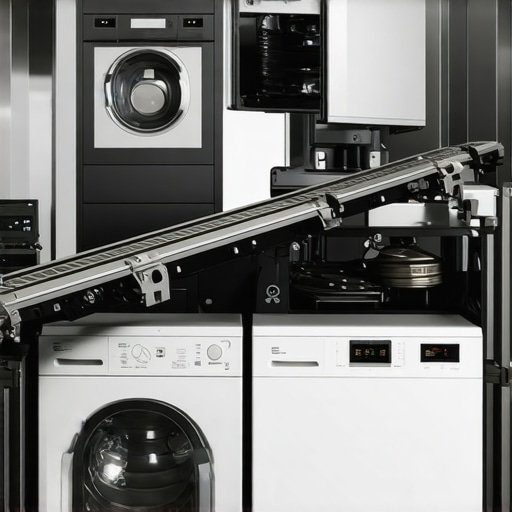
A dishwasher is a fortress of mixed materials. The outer shell is typically cold-rolled steel coated in porcelain or epoxy. Inside, you find a tub made of either stainless steel or reinforced polypropylene. Between these layers sits the insulation. Older units used fiberglass that irritates the skin and lungs of any amateur who tries to smash it apart. The modern units use thick mats of bitumen. This is a petroleum-based product used for sound-deadening. If it ends up in a high-heat incinerator without proper scrubbers, it releases volatile organic compounds. Our job is to ensure that these layers are separated. We strip the wire. We harvest the motor. We treat the steel as the commodity it is. The logistics of this process start the moment the truck tires hit your curb. We calculate the turn radius. We check the overhead clearance for the 15-yard roll-off. We evaluate the stairs. Every pound of junk is a liability until it is weighed at the scale.
“Waste is merely a resource in the wrong place; professional removal is the science of putting it back where it belongs.” – Disposal Industry Maxim
The logistical nightmare of residential appliance extraction
Junk removal Aurora professionals focus on volume optimization and load density to keep tipping fees manageable for homeowners. When handling furniture removal or garage clean outs, the spatial arrangement inside a dumpster rental Aurora unit determines the total cost of the disposal project and the environmental impact of the haul.
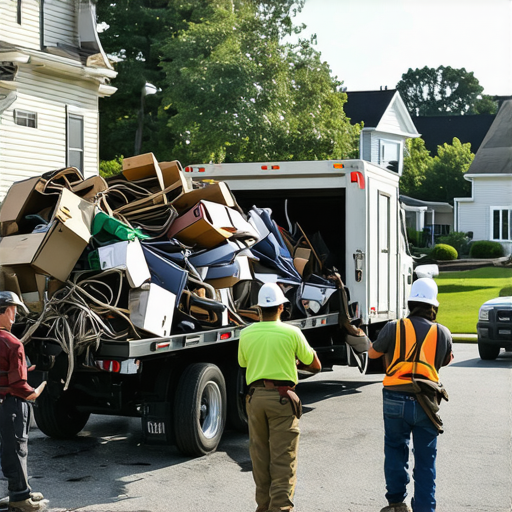
We think in Tetris. If you leave air gaps in the truck, you are burning money. A dishwasher is a hollow cube. To optimize the load, we often have to ‘nest’ other debris inside the dishwasher tub. This requires an understanding of structural load limits. You cannot put lead sash weights inside a plastic tub and expect it to hold. The floor snapped. I remember a job in a tight Aurora cul-de-sac where the client had three old dishwashers and a commercial range. The narrow street meant we could not drop a bin. We had to do a live-load. This means the truck stays running while we work. Every minute is a cost. The hydraulic fluid was humming. We had to navigate a 90-degree turn in a basement hallway with a unit that was leaking black, oily sludge from a failed pump. This is why you hire veterans. We know how to tarp the floor. We know how to use a stair-climbing dolly. We know that if that sludge hits the carpet, the job cost just doubled.
| Disposal Method | Cubic Yard Cost | Environmental Impact | Labor Intensity |
|---|---|---|---|
| Curbside Pickup | $15 – $45 | High Landfill Risk | Low |
| Full-Service Removal | $95 – $150 | Low (Sorted) | High (Pro) |
| Dumpster Rental | $350 – $600 | Moderate | Self-Managed |
| Illegal Dumping | Legal Fines | Catastrophic | Criminal |
The hidden chemistry of white goods and local ordinances
Appliance recycling Aurora mandates follow strict EPA guidelines regarding the disposal of hazardous materials found in household electronics. Whether it is a hoarder clean out Aurora or a simple appliance removal, the Resource Conservation and Recovery Act dictates how mercury switches and PCB capacitors must be documented and diverted from the main waste stream.
Many people assume a dishwasher is just metal. They forget the control board. Modern units have microprocessors that qualify as e-waste. If you toss that in a standard bin, you are violating local ordinances. In Aurora, the disposal sites are becoming stricter. They have scanners. They have spotters. If they find a capacitor leaking oily fluid, they will reject the entire 10-ton load. Then the hauler is stuck with a massive bill and a contaminated truck. We have to be the first line of defense. We inspect the wiring harnesses. We look for the tell-tale signs of older components. Before 1979, many capacitors used polychlorinated biphenyls or PCBs. These are ‘forever chemicals.’ They do not break down. They bioaccumulate. My team is trained to identify these vintage units. We do not just toss them. We contain them. We treat every appliance as a potential hazmat situation until proven otherwise. This is the difference between a curbside cowboy and a logistics strategist.
The heavy cost of keeping old machines
Garage clean outs often reveal deteriorating appliances that have become breeding grounds for pests and mold growth. Professional junk removal Aurora services recommend immediate disposal of non-functional units to prevent structural damage to the storage area and to reclaim valuable square footage in the home.
An old dishwasher in a garage is not just a piece of metal. It is a moisture trap. The remaining water in the pump goes stagnant. It smells like sulfur and rot. In the Aurora humidity, this water feeds mold colonies that can spread to your drywall. I have seen garage floors ruined because a slow leak from a forgotten dishwasher ate through the concrete sealant and caused spalling. The weight is another factor. A dishwasher full of old parts or magazines is a 300-pound anchor. Most residential garage floors are not thick enough to handle point-loads like that for decades without cracking. Then there is the BTU factor. If we take that unit to a waste-to-energy plant, we are looking at the potential energy in the plastic components. However, the carbon footprint of hauling low-grade plastics five hundred miles often exceeds the impact of local, high-efficiency waste-to-energy incineration. This is a contrarian view, but it is the truth. Sometimes the most ‘green’ thing you can do is burn it locally for power rather than shipping it across the country for ‘recycling’ that never actually happens.
- Leaking lead-acid batteries from old backup systems
- Ammunition and pressurized containers hidden in junk
- Wet paint or industrial solvents in unsealed cans
- Asbestos-containing materials from old pipe insulation
- Biological waste or medical sharps
The science of cubing out a hauling truck
Dumpster rentals Aurora require customers to understand weight limits and volume constraints to avoid overage charges at the landfill scale. A 15-yard dumpster can easily reach its tonnage cap if filled with dense materials like dishwasher motors, old tile, or scrap metal without a strategic loading plan.
When we pull up to a site, I am already calculating the density. A standard dishwasher occupies about 0.5 to 0.7 cubic yards. If I have twenty of them, I have already used half my truck. But the weight is the real killer. We have to balance the axle. You cannot put all the heavy motors at the tail of the truck. It makes the steering light. It makes the truck a deathtrap on the highway. We distribute the weight over the drive axles. We use the ‘crushables’ on top to lock everything in place. No movement. No shifting. If a load shifts while I am taking a corner near Phillips Park, the centrifugal force could tip the rig. This is the math that the average homeowner never sees. They just see a truck. I see a balancing act of six tons of debris moving at sixty miles per hour. Safety is not a suggestion. It is a mathematical requirement. Every strap is checked. Every tarp is tight.
“Modern manufacturing has created a crisis of complexity; our job is to simplify the mess through rigorous sorting and ethical disposal.” – SWANA Regional Report
The ghost in the garage
Hoarder clean out Aurora projects are the ultimate test of waste management endurance and logistical planning. These jobs require a multi-day strategy involving staged dumpster rentals and a dedicated team to handle the sorting of salvageable items versus true debris.
I once cleared a house where the junk wasn’t just stuff. It was a structural hazard. The floor joists were bowing under the weight of 40 years of newspapers that had absorbed ten years of basement humidity. We found three dishwashers buried in the pile. They weren’t even hooked up. They were being used as filing cabinets for old tax returns. The paper had turned into a solid block of cellulose. We had to use pry bars to get the paper out just so we could lift the machines. The smell of damp paper and old grease is something that stays in your nostrils for weeks. In situations like this, we don’t just haul. We act as forensic technicians. We have to determine what is holding up the ceiling. If we pull the wrong dishwasher, the whole stack of debris could collapse on the crew. We use shoring. We use caution. We use our brains before we use our backs. This is the reality of junk removal in the real world. It is dirty, it is heavy, and it is absolutely necessary for the health of our community.