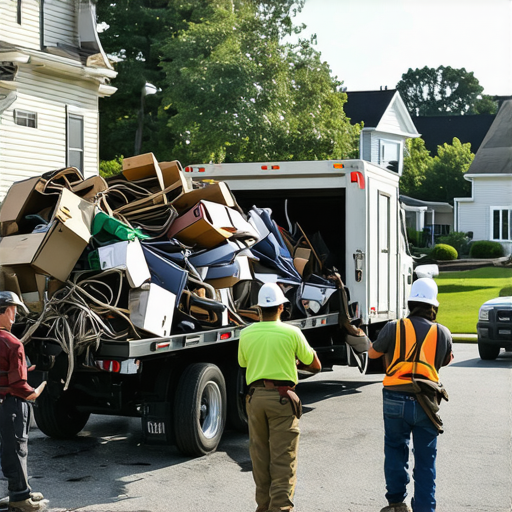
A business owner tried to save 500 dollars by hiring a guy with a pickup truck from a social media ad. Two weeks later, the police called him because his company’s confidential files were found in a ditch. Your junk is your liability until it hits the scale at a licensed transfer station. This is the reality of the waste industry in Aurora. People think they are just renting a metal box. They are actually engaging in a complex logistical operation that involves weight distribution, municipal codes, and structural integrity. I have seen driveways crack like eggshells because a rookie driver dropped a 20 yard bin full of wet shingles without checking the PSI limits of the asphalt. This is the science of disposal.
The illegal dumping trap that ruins businesses
Illegal dumping involves hiring unlicensed haulers who bypass transfer stations to avoid tipping fees, leaving you legally responsible for the waste. When you hire a professional for Junk Removal Aurora, you are paying for the chain of custody. If your discarded items end up in a local creek or a vacant lot near the industrial park, the environmental investigators look for names. They find old mail, utility bills, or branded office supplies. The fines in Aurora for illegal disposal far exceed the cost of a legitimate Dumpster Rental Aurora service. You must demand a manifest or a weight ticket. If the price seems too low, it is because they are cutting corners on the back end. The science of the scale is the only way to ensure your liability ends when the truck pulls away from your curb.
Physics of the driveway drop and bin safety
Placement of a roll off container requires a level surface with enough clearance for hydraulic arms and overhead power lines. A standard 14 yard bin empty weighs thousands of pounds. Once you load it with debris from Garage Clean outs, the downward pressure increases exponentially. In Aurora, the fluctuating temperatures cause the ground to shift. If you place a heavy bin on soft soil or thin asphalt during a summer heatwave, the metal rollers will sink. We use wooden planks to distribute the load. This is not a suggestion; it is a requirement for preserving property value. The truck needs at least sixty feet of linear space to back into position. If you have low hanging branches or old communication wires, the driver cannot safely tilt the rails. The physics of the lift are unforgiving. If the center of gravity is too high because you stacked a heavy sofa on top of light boxes, the bin could tip during the winch process.
| Material Type | Average Density (Lbs per Cubic Yard) | Disposal Difficulty Level |
|---|---|---|
| Loose Household Junk | 250 – 300 | Low |
| Construction Debris | 400 – 600 | Medium |
| Concrete or Brick | 2,000 – 3,000 | High |
| Green Waste (Wet) | 400 – 800 | Medium |
The structural math of a hoarder clean out
Hoarder Clean Out aurora projects require a systematic approach to weight management and hazardous material identification to prevent structural collapse. I once cleared a property where the floor joists were bowing under the weight of decades of accumulated paper. Paper is surprisingly heavy when it absorbs moisture. A single cubic foot of compressed newspaper can weigh up to 50 pounds. When we tackle a hoarder situation, we do not just throw things in a bin. We calculate the volume to avoid cubing out before we hit the weight limit. We also look for the hidden killers. Old cleaning chemicals, leaking batteries, and expired canisters. These items cannot go into a general dumpster. They require a separate hazmat manifest. The air quality in these environments is often compromised by mold spores and dust. We wear respirators not for fashion but because the particulate matter is a biological hazard.
“Waste is merely a resource in the wrong place; professional removal is the science of putting it back where it belongs.” – Disposal Industry Maxim
Garage clearings and the mixed waste nightmare
Garage Clean outs often result in mixed waste loads that can trigger surcharges at the landfill if not sorted properly. The biggest mistake residents make is mixing electronics with general debris. In Aurora, e-waste is diverted. If the transfer station operator sees a television or a computer monitor at the bottom of your bin, they will charge a contamination fee. This is the logic of the sort. You should keep metals separate because they have recovery value. Wood waste can be chipped. The concrete from a broken patio should never be mixed with old mattresses. The weight of the concrete will crush the mattress, making it impossible to recycle the foam or the springs. It is a logistical failure that costs money. While most people think recycling is always better, the carbon footprint of hauling low-grade plastics 500 miles often exceeds the impact of local, high-efficiency waste-to-energy incineration. We aim for the shortest path to the most efficient disposal method.
Why your appliance removal requires a hazmat mindset
Appliance removal involves the recovery of refrigerants and heavy metals that pose a significant environmental threat if released. Old refrigerators contain Freon or other CFCs. If you just toss a fridge into a dumpster, you are violating federal environmental laws. The seals must be removed and the gases must be drained by a certified technician. This is why specialized Appliance removal costs more than just moving a piece of furniture. We look at the copper coils, the compressors, and the insulation foam. Modern units are lighter but often use more complex chemicals. Washing machines are heavy because of the concrete counterweights used to balance the spin cycle. This is dead weight that adds to your tipping fee. We prefer to strip these units down to the base components to maximize recovery rates and minimize the load on our landfills.
- Propane tanks and pressurized cylinders
- Lithium-ion batteries and lead-acid car batteries
- Wet paint, solvents, and industrial thinners
- Asbestos-containing materials or insulation
- Biohazardous waste and medical sharps
- Tires (unless specifically arranged with the hauler)
The cubic yardage lie and true volume pricing
Volume based pricing is often misunderstood by customers who do not account for the air pockets created by inefficient loading. If you throw chairs and tables into a bin without breaking them down, you are paying to haul Aurora air. We call this the Tetris method. You want the heaviest, flattest items at the bottom. Break down the boxes. Cut the legs off the tables. Furniture Removal is an art of reduction. A 10 yard bin can hold a lot of material if it is processed. If it is just tossed in, it fills up in twenty minutes. This is where the logistics manager earns their keep. We calculate the density. We ensure the load is level so the tarp can cover it during transport. If items are sticking out of the top, the truck is a road hazard. The wind resistance on an uncovered bin can actually lift items out of the container at highway speeds, creating a lethal situation for trailing motorists.
“The goal of modern waste management is the total elimination of the concept of waste through precise material recovery.” – Solid Waste Association of North America (SWANA)
Navigating the Aurora permit minefield
Local ordinances in Aurora dictate where a bin can be placed and for how long before a permit is required. If the bin is on your private driveway, you generally do not need a permit. However, if it touches the sidewalk or the street, you are in the public right of way. The city has strict rules about reflective tape and overnight lighting for street bins. This is for the safety of snowplows and nighttime drivers. If you ignore these rules, the fines are issued to the property owner, not just the hauling company. We check the local maps for utility lines and underground vaults. You do not want to place a 30 yard bin on top of a water main shutoff valve. The logistical mapping of the site is the first step in every successful junk removal project. We understand the local geography of Aurora from the older residential streets to the new industrial zones.
The final gate at the transfer station
The truck arrives at the scale. The weight is recorded. The load is dumped and inspected for prohibited items. If we did our job right, there are no surprises. The materials are sorted for recycling, composting, or final disposal. This is the end of the line for your clutter. It is a process defined by regulations and physical limits. When you choose a professional, you are choosing a partner who understands the chemistry of the landfill and the mechanics of the truck. This is the only way to clear space without creating a new set of problems. Your garage is empty. Your driveway is intact. The environment is protected. This is the standard of waste management excellence that Aurora deserves. We do not just move junk; we manage the lifecycle of materials.