The High Stakes of Aurora Storm Recovery
I watched a rookie almost lose his eyebrows because a customer hid a half-full propane tank inside a pile of ‘harmless’ yard waste. We do not just lift. We inspect. Every. Single. Item. This is the reality of waste management in Aurora after a severe weather event hits the Fox River valley. When the winds tear through the Orchard Road corridor and flood the basements near downtown, the resulting debris is not just clutter. It is a logistical nightmare of saturated materials and hidden chemical hazards. This document outlines the technical requirements for safe and legal debris disposal under the current regulatory framework.
The anatomy of a storm surge
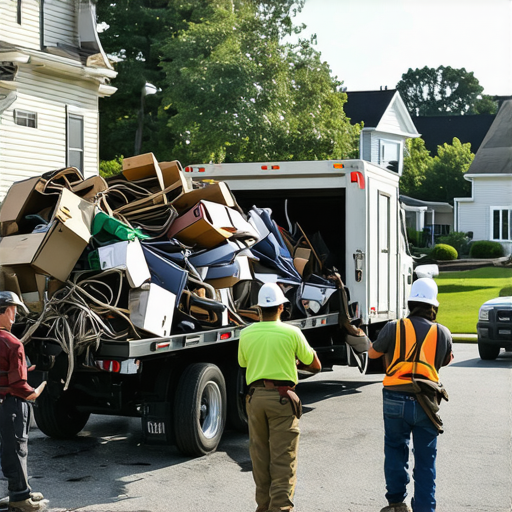
Aurora storm debris consists of organic waste, structural fragments, and saturated household goods that require immediate removal. Rapid extraction prevents the proliferation of mold and the degradation of structural integrity. Local disposal facilities like the Aurora Transfer Station require specific sorting protocols to manage the sudden influx of materials from damaged residential zones. The weight of your waste changes when it is wet. A dry sofa might weigh one hundred pounds. A waterlogged sofa weighs four hundred. The springs are rusty. The foam is a sponge for bacteria. We calculate the cubic yardage vs. the weight limit of the truck to ensure we do not crack your driveway or violate the Gross Vehicle Weight Rating (GVWR) on the road. The tires hiss under the pressure. The engine works harder. This is why professional junk removal Aurora services are a necessity rather than a luxury.
The hidden weight of wet drywall
Wet drywall and saturated gypsum board represent the most deceptive waste streams found in Aurora basements. These materials absorb water at a rate that triples their original mass, leading to unexpected costs at the scale house. Inaccurate estimations of this weight can lead to truck suspension failure and legal penalties at highway weigh stations. Consider the math of a basement flood. A standard twelve foot sheet of drywall weighs roughly fifty pounds. When fully saturated, that same sheet holds gallons of water. It becomes a heavy, crumbling slab of gray sludge. If you stack fifty sheets in a 15-yard dumpster, you are looking at several tons of weight. Most curbside cowboys do not understand the physics. They load the truck until the metal groans. We use load-leveling techniques to ensure the weight is distributed over the axles. This protects the Aurora streets and our equipment.
| Material Category | Dry Weight (lbs/yd) | Saturated Weight (lbs/yd) | Disposal Priority |
|---|---|---|---|
| Gypsum Drywall | 500 | 1,600 | Immediate (Mold) |
| Pine Structural Wood | 600 | 1,200 | High (Rot) |
| Upholstered Furniture | 200 | 800 | Critical (Bacteria) |
| Asphalt Shingles | 2,200 | 2,400 | Medium (Volume) |
The legal trap of the casual hauler
Hiring uncertified haulers for junk removal Aurora tasks exposes property owners to significant legal and environmental liabilities. According to the Resource Conservation and Recovery Act (RCRA), the generator of the waste is responsible for its final destination. If a cheap hauler dumps your items in a local creek or vacant lot, the trail leads back to you. Your junk is your liability until it hits the scale. I have seen the police track down business owners because their files were found in a ditch. It is not worth the fifty dollars you save by hiring someone from a social media ad. Professional firms provide a waste manifest. We track the cubic yards. We know exactly which landfill or recycling center received the load. We pay the tipping fees. We follow the rules because the alternative is a environmental disaster that poisons the local water table. In Aurora, the proximity to the Fox River makes illegal dumping a high-stakes crime against the community.
“Waste is merely a resource in the wrong place; professional removal is the science of putting it back where it belongs.” – Disposal Industry Maxim
The ghost in the garage
Garage clean outs in Aurora often reveal hazardous materials that regular municipal trash services will not accept. Common items like old fertilizers, pool chemicals, and lead-acid batteries require specialized handling to prevent environmental leaching. These items represent a data overflow of physical objects that can become volatile when mixed with storm debris. A hoarder clean out aurora project becomes even more complex after a storm. The clutter acts as a barrier to moisture. Underneath a pile of old newspapers, the floor joists may be rotting away. We find the floor joists bowing under the weight of forty years of papers that absorbed ten years of basement humidity. It is a structural hazard. We wear respirators. We use heavy-duty dollies. We do not just toss things. We categorize. We identify the difference between ‘junk’ and ‘hazardous waste’ before it ever touches the truck bed.
Items your hauler cannot legally touch
- Lithium-ion batteries found in modern power tools
- Leaking lead-acid car batteries
- Pressurized propane tanks from backyard grills
- Wet paint cans that have not been solidified with sand
- Medical biohazards or used needles
- Asbestos-containing insulation or floor tiles
The science of truck volume
Optimizing truck volume through cubing out is the primary method for reducing the carbon footprint of junk removal. This technique involves stacking items with zero air gaps to maximize the density of the load. Efficient loading reduces the number of trips to the transfer station and lowers the total fuel consumption of the recovery effort. Every cubic inch of air in a truck is a waste of money. We break down the furniture removal aurora projects by removing legs from tables and flattening boxes. We stack the heavy items on the bottom and the light items on top. It is like Tetris but with higher stakes. If the load shifts, the truck tips. We use heavy-duty straps. We use blankets. We treat the junk with the same respect as high-end furniture until it is safely offloaded at the processing facility. This level of detail is what separates a logistics professional from a guy with a truck.
“Effective waste management after a natural disaster is a primary pillar of public health and local economic recovery.” – SWANA Technical Manual
The heavy cost of keeping everything
Retaining damaged furniture after a storm leads to indoor air quality degradation and structural damage to flooring. Saturated upholstery serves as a breeding ground for black mold and pathogens within forty-eight hours of exposure. Professional furniture removal is the only way to ensure the safety of the residence. People get attached to their things. I understand that. But a water-damaged sofa is a biohazard. The wood frame warps. The fabric stinks. The cost of restoration often exceeds the cost of a new item. We provide a swift exit for these items. We take the stress out of the decision. By the time our truck leaves your driveway in Aurora, the air quality in your home already begins to improve. We clear the path for the contractors. We clear the path for the future.
Aurora disposal limits and the law
Municipal waste schedules in Aurora often exclude bulky items and construction debris resulting from major storm events. Residents must utilize private junk removal services to handle items like refrigerators, water heaters, and large-scale carpet removal. The city has limits. The transfer station has rules. We know those rules. We know that appliance removal aurora requires specialized handling for refrigerants and heavy metals. We do not just dump a fridge. We ensure the Freon is recovered by a certified technician. We ensure the metal is recycled. This is the difference between a logistical failure and a successful cleanup. Your backyard is a logistical puzzle. We are the ones who solve it. We take the heavy lifting, the legal risk, and the environmental burden off your shoulders. The floor snapped. We didn’t. We just kept loading until the job was done.