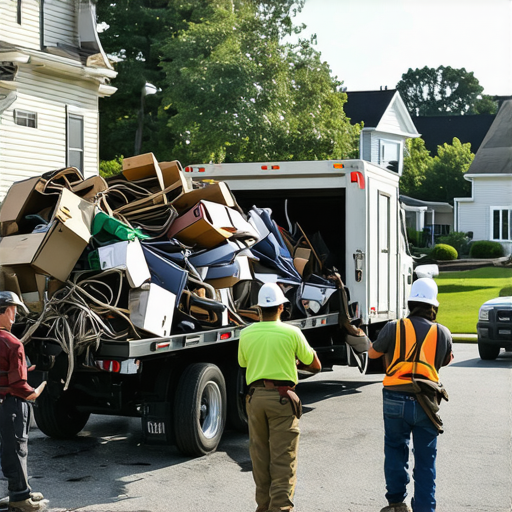

Appliance Recycling: 2026 Aurora Water Heater Disposal
The smell of diesel exhaust and hydraulic fluid defines my morning. Every day in the Aurora waste sector involves a complex puzzle of volumetric weight and cubic yard density. I see a water heater and I do not just see a metal tank. I see a two hundred pound liability filled with calcium carbonate sediment and potential environmental toxins. This is the reality of professional waste management where every pound counts toward a tipping fee and every item has a specific recovery path. Most homeowners view junk as a nuisance. I view it as a logistical challenge that requires precision and a deep understanding of the Resource Conservation and Recovery Act guidelines.
A business owner once tried to save five hundred dollars by hiring a guy with a pickup truck from a social media ad. This was a classic mistake. Two weeks later, the police called him because his company documents and several old appliances were found in a ditch near the Cherry Creek spillway. Your junk is your legal liability until it hits the certified scale at a licensed transfer station. This is why we track every load. We document every haul. We ensure that the chain of custody for your waste remains unbroken. In Aurora, the penalties for illegal dumping can reach thousands of dollars, making that cheap hauler a very expensive risk. We don’t just lift. We inspect. Every. Single. Item.
The ghost in the garage
Aurora water heater disposal requires specialized heavy-load dollies and logistical planning to ensure appliance recycling compliance. A standard residential water heater can weigh between 150 and 500 pounds depending on the sediment accumulation inside the tank. Professional Junk Removal Aurora teams must calculate the weight density of these units before attempting extraction from confined spaces like basement utility closets or tight garage corners.
When a water heater reaches its end of life in 2026, it is rarely empty. Years of hard water in the Aurora area lead to massive mineral deposits at the bottom of the tank. This sediment turns a manageable appliance into a back-breaking anchor. We utilize 12-ply pneumatic tires on our dollies to prevent floor damage while navigating stairs. The physics of the move are unforgiving. If the center of gravity shifts while descending a flight of wooden stairs, the structural integrity of the treads is tested. We calculate the load limit. We use high-tensile ratcheting straps. The tank is secured. The truck is prepped. The tetris begins.
Why your cheap hauler is a legal time bomb
Professional junk removal services provide verified disposal receipts and environmental compliance documents to protect property owners from illegal dumping fines. Choosing a certified hauler ensures that hazardous materials like mercury switches or lead components are processed at licensed recovery facilities instead of being abandoned in local landfills or rural ditches.
The curbside cowboys who offer low-cost hauling rarely pay the tipping fees at the Denver Regional Landfill. These fees are rising. They are based on weight and material type. If a hauler quotes you less than the cost of the tipping fee itself, they are dumping your property illegally. This is not just an environmental crime. It is a civil liability. If a water heater with your serial number is found in a protected waterway, the environmental authorities come to your door first. We provide the manifest. We show the scale ticket. We prove the recycling path.
“Waste is merely a resource in the wrong place; professional removal is the science of putting it back where it belongs.” – Disposal Industry Maxim
The heavy cost of keeping everything
Hoarder clean out Aurora projects involve extreme load densities and structural hazard assessments to manage compressed domestic waste. These situations often require industrial-grade PPE and biometric scanning to identify hidden hazards such as mold spores or structural decay caused by moisture retention in stacked debris.
I once cleared a house where the junk was a structural hazard. We found the floor joists were bowing under the weight of forty years of newspapers that had absorbed ten years of basement humidity. This is the reality of extreme clutter. It changes the physics of the building. The air becomes heavy. The floor becomes a trampoline. We don’t just clear the room. We stabilize the logistics. We use 15-yard trucks because they offer the best balance of volume and weight capacity for residential streets. A 40-yard dumpster is often too heavy for a standard driveway. It will crack the concrete. We know the limits. We respect the engineering of the property.
Regional realities of the Aurora waste stream
Aurora waste management protocols are dictated by municipal zoning laws and the logistical constraints of the I-225 corridor. Transporting bulky items to transfer stations on Tower Road requires route optimization to minimize fuel consumption and carbon emissions while adhering to strict tipping schedules set by regional landfills.
Traffic in Aurora is a constant variable in our logistics. A trip to the landfill at 10:00 AM is a different calculation than a trip at 4:00 PM. We time our loads. We optimize the route. If we are hauling furniture removal loads from a garage clean out, we pack the soft items around the hard appliances to maximize space. We call this cubing out the truck. No air is wasted. Every cubic inch of the truck box is a cost center. If we leave gaps, we lose money. If we overload the axle, we risk a DOT fine. It is a game of inches and pounds.
The mathematical truth of dumpster rentals
Dumpster rentals Aurora offer a fixed-volume solution for large-scale clean outs but require site permits and weight limit monitoring. Comparing cubic yard costs against full-service labor reveals that junk removal Aurora is often more cost-effective for dense materials like appliance removal or concrete debris.
| Disposal Method | Cost Basis | Best For | Recovery Rate |
|---|---|---|---|
| Full Service Junk Removal | Volume (Cubic Yard) | Single appliances | High (90%+) |
| Dumpster Rental | Flat + Overweight | Garage clean outs | Moderate |
| Municipal Pickup | Item count | Standard waste | Low |
The math of a dumpster is deceptive. You pay for the space but you are limited by the weight. If you fill a 20-yard dumpster with old shingles or water heaters, you will exceed the weight limit before the bin is half full. Then come the overage fees. These fees are the silent killers of a budget. With our service, you pay for what we haul. We handle the weight. We handle the labor. The math is simple and transparent. No hidden scale fees. No surprises at the gate.
Furniture removal and the fragility of modern materials
Modern furniture removal involves handling low-density fiberboard that lacks the structural integrity of vintage hardwoods. This disposable furniture often disintegrates during extraction, requiring specialized containment to prevent micro-plastic contamination and debris scatter during the loading process.
I hate modern furniture. It is air and glue. If you look at it wrong, it breaks. This makes it a nightmare to load because it cannot be stacked. It has no structural strength. Vintage solid oak is different. It is heavy. It is honest. It takes up less space because we can stack four chairs without them crushing each other. When we do a furniture removal, we assess the materials. We separate the metals from the wood. We ensure the particle board goes to the right processing stream. It is about the diversion rate. How much can we keep out of the ground? That is the real metric of success.
The environmental science of material recovery
Appliance recycling and electronic waste processing are regulated industries that focus on resource recovery and toxicant mitigation. The EPA guidelines mandate the safe extraction of refrigerants and heavy metals to prevent groundwater contamination and atmospheric damage from improper disposal.
“Professional waste management is the first line of defense in urban environmental protection; the collector is as vital as the engineer.” – Solid Waste Association of North America
- Items Your Hauler Cannot Legally Touch:
- Lead-acid batteries and automotive fluids.
- Unsealed containers of oil-based paints.
- Propane tanks and pressurized cylinders.
- Industrial chemicals and pesticides.
- Biohazardous waste and medical needles.
- Ammunition and explosive materials.
We see it all. People try to hide batteries in the middle of a pile of clothes. They put half-full paint cans at the bottom of a box. This is dangerous. A single battery can spark a fire in the back of a truck. A leaked gallon of paint can ruin the entire load, making it unrecyclable. We inspect. We verify. If it is hazardous, we give you the address of the specific county drop-off site. We do not take shortcuts. Our reputation is built on the integrity of our loads. The landfill operators know us. They know our trucks are clean. They know we follow the rules. That is how you survive twenty-five years in this business.