The liability of the low-bid loader
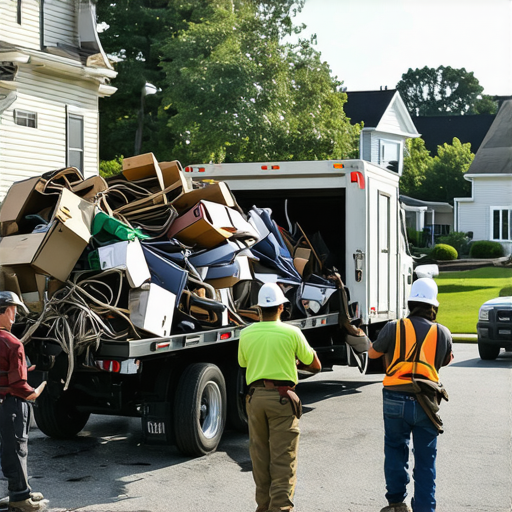
Commercial junk removal in Aurora requires a deep understanding of the local waste stream and the legal frameworks governing disposal liability. Business owners often fail to realize that their responsibility for discarded materials does not end when the truck pulls away from the curb. If a cut-rate hauler dumps your retail fixtures in a Colorado drainage ditch, the trail of receipts leads straight back to your balance sheet. I recall a business owner near the Town Center at Aurora who tried to save 500 dollars by hiring a man with a rusted flatbed from a social media ad. Two weeks later, the local authorities contacted him because his company confidential files and branded packaging were found scattered across a sensitive wildlife area. Your junk is your legal liability until it hits the scale and receives a certified weight ticket at a licensed transfer station. Professional haulers do not just move objects. We manage risks. We provide the paper trail that protects your enterprise from the Resource Conservation and Recovery Act violations. Every load must be documented. Every cubic yard must be accounted for. In the world of waste management, a cheap price often masks a high-level legal gamble. We see the aftermath of these decisions every month. It is messy. It is expensive. It is entirely avoidable if you prioritize logistical integrity over a low-ball quote.
Aurora retail inventory death traps
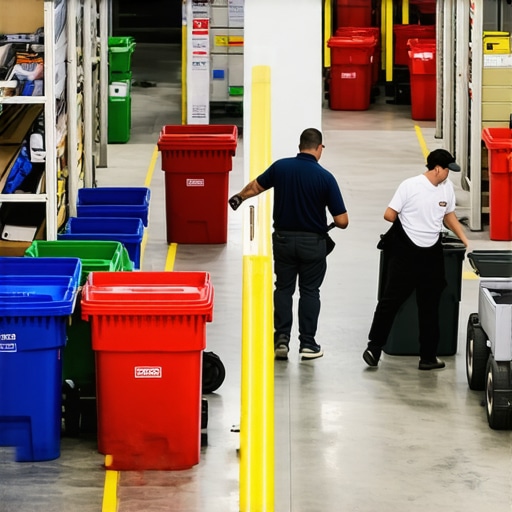
Retail de-stocking involves the removal of diverse materials ranging from medium-density fiberboard fixtures to obsolete point-of-sale electronics that require specific hazardous waste handling. The sheer volume of material in a standard retail liquidation can overwhelm standard municipal services. Retailers often face the daunting task of clearing thousands of square feet in a matter of days to avoid lease penalties. This is not a job for a single dumpster. It is a choreographed heavy-lift operation. Store fixtures are notoriously difficult to pack. They are awkward, heavy, and often built with mixed materials that transfer stations reject if not properly separated. I have seen retail basements in Aurora filled with decades of ‘just in case’ inventory that has become a structural fire hazard. These spaces become tombs for dead capital. The air is thick with the smell of old cardboard and stagnant dust. We approach these sites like a logistical autopsy. We identify the high-density items first. We look for the lead-acid batteries in old backup power systems. we hunt for the mercury-containing ballasts in the back-room lighting. A single oversight in a de-stocking project can result in a rejected load at the landfill, which doubles your transport costs instantly.
“Waste is merely a resource in the wrong place; professional removal is the science of putting it back where it belongs.” – Disposal Industry Maxim
The physics of the pack
The efficiency of a junk removal project is determined by the load factor and the ability to minimize air gaps within the truck bed. We call this cubing out. A 15-yard truck has a specific volumetric capacity, but if you toss chairs and desks in haphazardly, you are paying to haul Aurora air. My teams are trained in the art of geometric optimization. We break down every table. We stack the flat-pack shelving with zero tolerance for wasted space. This is where the logistics manager earns his keep. Consider the weight of a standard retail counter made of MDF. It weighs approximately 600 to 800 pounds per cubic yard. If you do not balance that load over the truck axles, you risk hydraulic failure or a dangerous shift during transit on I-225. We calculate the center of gravity for every load. We use heavy-duty tie-downs for anything that protrudes. We understand the sheer force required to lift a commercial-grade refrigerator out of a tight breakroom. It is about leverage and mechanical advantage. When we clear a retail space, we are not just throwing things away. We are engineering a dense, stable mass of material that can be transported safely and cost-effectively to the Denver-Arapahoe Disposal Site.
| Material Type | Density (Lbs/CuYd) | Disposal Complexity |
|---|---|---|
| MDF Fixtures | 600-800 | Moderate |
| Plate Glass | 2000+ | High |
| E-Waste | 300-500 | Critical |
| Cardboard | 50-100 | Low |
Regulatory traps for the unwary
Navigating the waste ordinances in Aurora means understanding the difference between general debris and items that require special manifests under state law. The Colorado Department of Public Health and Environment has strict rules regarding the disposal of electronics and chemicals. Retailers often assume they can throw old monitors or cleaning supplies into a standard dumpster. This is a mistake that leads to heavy fines. Many commercial property managers in Aurora will not even allow a dumpster on-site without a specific permit and proof of insurance. We handle the paperwork. We know which items the Front Range landfills will accept and which ones must go to specialized recycling centers. For example, some older retail spaces still have fluorescent tubes that contain mercury vapor. These cannot be crushed. They must be packed in specialized containers to prevent atmospheric contamination. We also deal with the fallout of the throwaway culture. Modern ‘fast-furniture’ is often made of resins and glues that make it non-recyclable. The carbon footprint of hauling these low-grade materials 500 miles often exceeds the impact of local, high-efficiency waste-to-energy incineration. We provide the data that helps you choose the most ethical path for your debris.
- Wet lead-acid batteries from backup power units
- Unspent pressurized cylinders or fire extinguishers
- Friable asbestos insulation from older retail units
- Industrial solvents or mercury-containing thermostats
- Biological waste or medical sharps from pharmacies
The myth of universal recycling
While many businesses claim to recycle 100 percent of their waste, the reality of global commodity markets makes this goal nearly impossible for mixed retail junk. Recycling is a business of purity. If a pallet of cardboard is contaminated with food waste or oil, a recycler will reject the entire ton. In Aurora, the logistics of recycling have shifted significantly. We focus on the high-value streams first. Metal shelving and copper wiring are always diverted. They have intrinsic value and clear paths for reclamation. However, the plastic films and composite woods found in many retail displays often end up in the landfill because there is no viable market for them. I have seen ‘green’ companies spend thousands of dollars to ship plastic waste across the country, only for it to be buried anyway. We provide a realistic assessment. We do not lie to our clients about where their junk goes. We aim for the highest diversion rate possible, but we stay grounded in the physical reality of the waste industry. Waste-to-energy is often a more sustainable choice for low-grade plastics than shipping them to a facility that cannot process them.
“Proper management of hazardous waste is not just a regulatory requirement but a fundamental safeguard for community health.” – Environmental Protocol Guide
The heavy cost of keeping everything
Holding onto obsolete retail inventory creates a phenomenon I call ‘physical debt’ where the cost of storage eventually exceeds the value of the items. Every square foot of your Aurora retail space has a monthly cost. When that space is occupied by broken mannequins, outdated signage, and rusted shelving, you are paying a high interest rate on junk. I have walked through warehouses where the floor joists were literally bowing under the weight of decades-old catalogs. These catalogs had absorbed basement humidity, doubling their weight and creating a breeding ground for mold. The structural risk is real. When we perform a cleanout, we are restoring the building’s integrity. We remove the fuel for potential fires. We clear the paths for emergency exits. A clean retail space is a functional retail space. The psychological relief for the staff is palpable. They go from tripping over debris to working in a streamlined environment. We treat the removal process as a surgical strike. We get in, we stabilize the load, we extract the material, and we leave the space swept clean. It is a transformation from chaos to order.