Selecting Junk Removal Services Aurora: 3 Questions to Ask
The scent of diesel fuel and fresh hydraulic fluid is the fragrance of a clean slate. I have spent twenty-five years staring at the back of a 15-yard dump body, calculating the exact trajectory of a discarded refrigerator. Every piece of debris has a weight. Every weight has a cost. Every cost has a consequence. In Aurora, the logistics of waste are not just about picking up a pile of old lumber. They are about the physics of the load and the integrity of the disposal chain. I view a cluttered space as a logistical failure. I see it as a potential environmental liability that requires a master strategist to resolve. We do not just haul stuff. We manage the terminal lifecycle of physical matter.
The liability of the curb
Selecting a Junk Removal Aurora service requires understanding that ownership of waste does not end at the driveway. Legal liability follows every discarded item until it is processed at a licensed transfer station or landfill. Aurora residents must confirm insurance certificates and operating licenses to prevent illegal dumping charges and environmental fines.
A business owner in the Fox Valley once tried to save five hundred dollars by hiring a guy with a pickup truck from a social media ad. He thought he was being efficient. He thought he was saving his margin. Two weeks later, the police called him. His company confidential files were found in a muddy ditch near the Kane County line. Your junk is your liability until it hits the scale at a certified facility. If the person you hire lacks a legitimate permit, you are the one responsible for where those items land. I have seen the fallout of these curbside cowboys. They take the cash and dump the load in a local creek or an abandoned lot. This is why I am obsessed with the manifest. A manifest is a document that proves the chain of custody. It shows the time of pickup, the weight of the load, and the final destination. If a hauler cannot produce a disposal receipt upon request, you are playing a dangerous game with the law.
The math of the 15-yard bin
Dumpster Rentals Aurora and full-service junk removal rely on volumetric pricing and weight-based fees. A standard 15-yard dump truck has a specific cubic capacity that must be optimized through load density calculations. Professionals use structural loading techniques to minimize wasted air space and ensure safe transport of heavy debris.
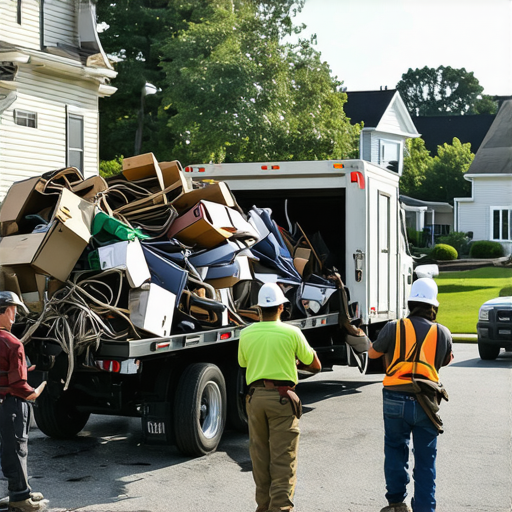
When we talk about cubing out a truck, we are talking about Tetris with three thousand pounds of pressure. If you throw furniture into a truck haphazardly, you are paying to haul air. Air is expensive. A skilled loader knows how to break down a dresser to its flat components. They know how to nest chairs within the cavity of a sectional sofa. We calculate the density of the load to ensure the hydraulic lift can handle the breakover weight. A typical residential driveway in Aurora is designed for a certain PSI. If you bring in a 40-yard roll-off filled with concrete, you are going to crack the slab. We use the 15-yard model because it provides the best balance of volume and weight distribution. It allows us to navigate the tighter streets of the near-east side without destroying the infrastructure. We look at the springs. We watch the tires. We listen to the engine. Every extra inch of space we save is money back in the pocket of the client and less fuel burned on the road.
| Waste Metric | Loose Debris (Cubic Yard) | Compacted Waste (Cubic Yard) |
|---|---|---|
| Density (lbs) | 250 to 300 | 600 to 1000 |
| Cost Basis | Volume Only | Weight plus Volume |
| Equipment | Manual Loading | Hydraulic Compactor |
“Waste is merely a resource in the wrong place; professional removal is the science of putting it back where it belongs.” – Disposal Industry Maxim
The hazardous reality of appliance disposal
Appliance removal in Aurora Illinois involves strict adherence to the Resource Conservation and Recovery Act. Refrigerators and air conditioners contain refrigerants like Freon or HFCs that require certified recovery. Professional haulers ensure that heavy metals and toxic chemicals are extracted before the metal casing is recycled for scrap value.
I watched a rookie almost lose his eyebrows because a customer hid a half-full propane tank inside a pile of harmless yard waste. We do not just lift. We inspect. Every single item. When we handle an old washing machine, we are not just moving metal. We are moving a mechanical assembly that might contain capacitors with PCBs or old lead-weighted balancers. In Aurora, the local transfer stations have specific bays for e-waste and white goods. If we find a lithium-ion battery buried in a pile of general trash, we stop. Those batteries are fire starters. They are the primary cause of truck fires in our industry. When they get crushed by the hydraulic blade, they vent and ignite. This is why we ask about the contents of every box. We are looking for the hidden hazards that could turn a routine haul into an emergency situation. The BTU potential of a load of dry wood is high. The explosive potential of a hidden chemical is higher.
The weight of a lifetime in the Fox Valley
Hoarder Clean Out Aurora projects require specialized logistics and sensory management. These heavy-load projects often involve biohazard risks and structural integrity concerns within residential properties. A strategic approach ensures efficient sorting and maximum diversion rates of salvageable materials from the waste stream.
I once cleared a house where the junk was not just stuff. It was a structural hazard. We found the floor joists were bowing under the weight of 40 years of newspapers that had absorbed ten years of basement humidity. The paper had become a solid mass of cellulose and mold. It weighed three times what it should have. We had to shore up the floor from the basement before we could even begin the removal. This is the microscopic reality of the work. You have to understand the physics of the building. You have to know if the stairs can handle two men carrying a three-hundred-pound cast iron tub. In Aurora, many of the older Victorian homes have narrow, winding staircases that were never meant for modern bulky furniture. We have to disassemble pieces on site. We use heavy-duty floor protection. We use high-filtration masks. We treat the site with the respect it deserves while maintaining the clinical efficiency of a demolition crew. The goal is the diversion rate. We want to see how much we can keep out of the landfill. We look for metal, clean cardboard, and untreated wood.
“The improper disposal of hazardous household waste can contaminate groundwater and pose significant risks to waste management workers and the environment.” – EPA Guidelines for Municipal Solid Waste
Items that the truck cannot carry
Junk Removal companies are regulated by local ordinances and federal law regarding prohibited materials. Hazardous waste, liquid chemicals, and medical debris require specialized transport permits. Residents should consult an Aurora waste expert to find legal disposal sites for restricted items that cannot go into a standard dumpster.
- Lead-acid automotive batteries.
- Wet oil-based paint and thinners.
- Asbestos-containing insulation or floor tiles.
- Pressurized cylinders and fire extinguishers.
- Infectious medical waste or sharps.
- Industrial grade chemicals and pesticides.
- Explosives and small arms ammunition.
The carbon footprint of hauling low-grade plastics 500 miles often exceeds the impact of local, high-efficiency waste-to-energy incineration. This is a hard truth most people do not want to hear. They want to believe everything can be recycled. The reality is that if the market for a material does not exist, it is just trash. We focus on the high-value recovery. Steel, aluminum, and copper. These have a clear path back into the economy. When you ask your hauler where the stuff goes, listen for the names of local processors. If they say it all goes to the dump, they are lazy. If they say it all gets recycled, they are lying. The truth is in the middle. The truth is in the sorting. We spend hours at the warehouse breaking down loads to find the 20 percent that can be saved. That is the difference between a hauler and a waste management strategist. We do the work that the curb cowboys refuse to do. We protect the Fox River. We protect the streets of Aurora. We keep the math of the load tight and the liability of the client zero. [image_placeholder_1]“