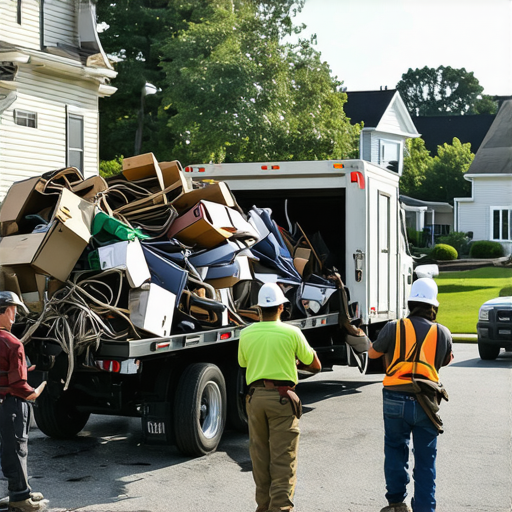

A hazardous surprise in the debris pile
I watched a rookie almost lose his eyebrows because a customer hid a half-full propane tank inside a pile of harmless yard waste. We don’t just lift. We inspect. Every. Single. Item. Residential junk removal in Aurora is not a simple game of haul and dump. It is a calculated operation. Kitchen remodels generate the most complex waste streams in a home. You have mixed media. You have heavy substrates. You have potential toxins. I once cleared a site where the owner tried to hide asbestos tiles under layers of laminate. The dust was a legal and health nightmare. This is why professional haulers obsess over the manifest. Your junk is your liability until it hits the scale at the transfer station. The truck groaned under the weight. The floor snapped when we moved the island. Every cubic inch of that 15-yard truck must be utilized. Wasted air is wasted profit. We use the tetris method. Large appliances go in the back to act as anchors. Flat cabinetry panels line the sides. Bagged debris fills the voids. It is a science of density and weight distribution.
The structural anatomy of a kitchen tear out
Kitchen remodel cleanups require sorting heavy materials like granite, cabinets, and appliances into specific waste streams to optimize tipping fees. Aurora homeowners often underestimate the physical mass of a kitchen. A standard granite slab weighs nineteen pounds per square foot. A full kitchen can easily reach three thousand pounds of debris. This is not for a standard pickup truck. You need a heavy-duty suspension and a driver who understands load shifts. When we approach an Aurora kitchen remodel, we look at the path of egress first. We measure doorways. We check the structural integrity of the stairs. Heavy appliance removal is a primary concern. Refrigerators contain refrigerants that require specialized recovery. You cannot just toss them. The EPA regulates this strictly. We track the cubic yardage of every load to ensure we do not exceed the gross vehicle weight rating. Overloading a truck is a safety violation. It ruins the brakes. It puts the public at risk on Tower Road.
“Waste is merely a resource in the wrong place; professional removal is the science of putting it back where it belongs.” – Disposal Industry Maxim
Why your cheap hauler is a legal time bomb
Unlicensed junk removal services in Aurora often bypass legal transfer stations to avoid tipping fees which leaves the homeowner legally responsible for illegal dumping. If your old microwave ends up in a ditch in Adams County, the serial number can lead investigators back to your front door. Professional junk removal Aurora services provide a paper trail. We use established landfills and recycling centers. We pay the fees. We follow the Resource Conservation and Recovery Act protocols. The curbside cowboys do not. They take your cash and disappear. You lose the protection of insurance and liability waivers. Our team wears steel-toe boots and high-visibility vests. We carry workers compensation. If a worker drops a range on your hardwood floor, we cover it. The guy with a trailer from a social media ad will not. Logistics management is about risk mitigation. We calculate the turn-around time from the job site to the transfer station. We account for traffic on I-225. We minimize the footprint of the truck on your driveway using plywood pads. We protect your property while removing your waste.
The science of cubing out a fifteen yard bin
Cubing out a truck involves maximizing every cubic inch of space to lower the cost per pound for the homeowner during a cleanup. It is about the geometry of the load. We break down cabinetry. We remove the doors and hinges. We stack the carcasses like nesting dolls. This prevents the truck from hitting its volume limit before its weight limit. In the hauling world, we call this the tetris. Empty space is the enemy. Every gap between a dishwasher and a pile of drywall is a loss. We use heavy lifting straps for appliance removal. We don’t drag. We lift. Dragging ruins subfloors. It creates more junk. We treat the removal like a reverse construction project. The sequence matters. We take the big items first. We finish with the broom-clean service. A kitchen remodel produces fine dust. We use HEPA vacuums for the final pass. It is the professional standard. Aurora residents expect a clean site when the truck pulls away. We deliver that every time.
| Material Type | Average Weight per Cubic Yard | Typical Disposal Method |
|---|---|---|
| Demolition Drywall | 500 lbs | Landfill or Gypsum Recycling |
| Cabinetry Wood | 300 lbs | Waste-to-Energy or Mulch |
| Ceramic Tile | 2200 lbs | Inert Fill Landfill |
| Old Appliances | 150 lbs per unit | Scrap Metal Recovery |
Local disposal realities in the Aurora corridor
Disposal in Aurora depends on the specific rules of local transfer stations like the Denver Regional Landfill which have strict rules on prohibited items. The local landscape is shifting. Tipping fees increase annually. We monitor these rates to provide accurate quotes. Garage clean outs often reveal items that kitchen remodels miss. We find old paint cans and motor oil. These are hazardous. You cannot mix them with your kitchen cabinets. We segregate these on the truck. The city of Aurora has specific bulky item pickup schedules, but they often exclude construction debris. That is where we step in. We handle the furniture removal that the city leaves behind. We know which stations take e-waste. We know where to take the old linoleum that might contain legacy adhesives. It is a local knowledge game. We navigate the permit requirements for dumpster rentals Aurora when the project is too big for a single truckload. We handle the logistics so you can focus on the new backsplash.
“The management of solid waste is a critical component of urban infrastructure that protects public health and the environment.” – Solid Waste Association of North America
Hidden dangers in the drywall and flooring
Old kitchen materials in Aurora homes can contain asbestos or lead paint which requires specialized handling during the removal process to prevent contamination. Before 1978, lead was common. Before the mid-eighties, asbestos was in everything from floor tiles to joint compound. We look for the signs. Brittle flooring. Grayish insulation. If we suspect a hazard, we stop. We don’t risk our lungs or your home. This is the difference between a laborer and a specialist. Information gain is vital here. While most people think recycling is always better, the carbon footprint of hauling low-grade plastics five hundred miles often exceeds the impact of local high-efficiency waste-to-energy incineration. We choose the most efficient path. We prioritize local recovery. We aim for a high diversion rate. We want to keep as much out of the landfill as possible. But we do it safely. We use poly-sheeting to contain dust. We use professional grade masks. The heavy cost of keeping everything is the loss of your living space. We reclaim that space for you.
- Wet chemicals and liquid paints
- Lithium ion batteries and car batteries
- Pressurized tanks and cylinders
- Biohazardous materials and medical waste
- Asbestos-containing materials without certification
Maximizing your diversion rate during cleanups
Diversion rates represent the percentage of waste diverted from landfills through recycling or repurposing during a kitchen gut. We aim for seventy percent or higher. We salvage the metal. Copper wiring from the old outlets is valuable. The steel from the oven is recyclable. Even the old cast iron sink has a second life at the foundry. Hoarder clean out aurora services require even more sorting. It is a slow process of sifting. We find the value in the volume. We separate the paper from the plastic. We find the documents that shouldn’t be tossed. We protect your privacy. Garage clean outs are similar. We find tools that can be donated. We find scrap that can be sold. This reduces the overall cost of the haul. We pass those savings to the customer. It is a partnership. We manage the mess. You get your home back. The truck is packed tight. The tarp is snapped down. The hydraulic lift is locked. We are ready to roll. That is the logistics manager’s promise. [image_placeholder_1]