The High Cost of Heavy Lifting in Kane County
I once saw a local business owner try to save 500 dollars by hiring a guy with a rusted pickup truck found on a social media ad. Two weeks later, the police called him because his company confidential files and three massive oak desks were found rotting in a ditch near the Fox River. Your junk is your legal liability until it hits the certified scale at a transfer station. In Aurora, Illinois, the logistics of furniture removal are not just about muscle. They are about the physics of weight distribution and the legalities of the Resource Conservation and Recovery Act. When you deal with 400-pound dressers, you are managing a kinetic hazard. One slip on a narrow staircase in a historic Near East Side home and you have a structural insurance claim. We do not just move things. We calculate load density. We measure the PSI of hydraulic lifts. We ensure that every cubic yard of air in the truck is eliminated through precise loading strategies. If you leave air gaps in a 15-yard dumpster, you are burning money. Solid waste management is a game of volume and weight. Every dresser, armoire, and sideboard has a story, but to a logistics manager, it has a density profile and a disposal path. This is the reality of waste management in the second largest city in Illinois.
The physics of the heavy lift
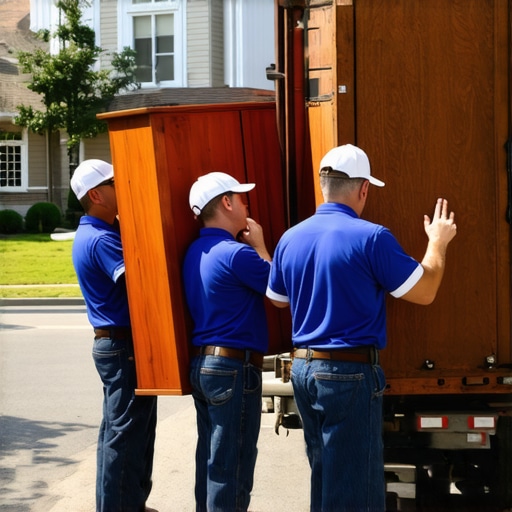
Furniture removal in Aurora IL involves kinetic energy management, logistical staging, and heavy-load equipment to safely transport solid wood dressers from residential structures to Kane County transfer stations without property damage or workplace injuries. A vintage cherry wood dresser can weigh upwards of 350 pounds. When you add a marble top, you are looking at a localized floor load that exceeds standard residential building codes for moving objects. Most people fail to realize that the center of gravity shifts the moment you tilt a dresser to navigate a landing. If the drawers are not removed or strapped, they become internal projectiles. I have seen floor joists groan under the concentrated weight of a mahogany sideboard. We use non-marring floor protection and shoulder dolly systems that redistribute the weight across the musculoskeletal system of the crew. It is not about being strong. It is about being a lever. We treat every piece of furniture like a logistical unit that needs to be packed into a truck with zero wasted space. The goal is to cube out the vehicle. If the truck is 12 feet long, 8 feet wide, and 6 feet high, we have 576 cubic feet of space. Every inch of that must be filled with debris, not oxygen.
The Aurora transfer station gate fees
Disposal pricing in Aurora is determined by tipping fees at the Waste Management Aurora Transfer Station, where volumetric measurements and tonnage rates dictate the total cost of furniture disposal and junk removal services. You cannot just pull up to the Kane County landfill and toss a couch. There are minimum fees. There are surcharges for mattresses. There are environmental fees for treated wood. If your dresser was manufactured before 1978, there is a high probability it contains lead-based paint. That changes the disposal profile. In Aurora, the municipal bulky item pickup is limited. They might take one item a week, but if you are doing a full garage cleanout or a hoarder situation on Orchard Road, the city service is useless. You need a private hauler who understands the difference between C and D waste and municipal solid waste. We look at the BTU potential of the wood. Some recovered wood waste can be ground for industrial fuel, which improves our diversion rate. A high diversion rate is the badge of a professional. A low diversion rate is the sign of a curb crawler. We aim for 70 percent diversion on every load. That means 70 percent of what we haul never touches a landfill cell.
“Waste is merely a resource in the wrong place; professional removal is the science of putting it back where it belongs.” – Disposal Industry Maxim
The hidden chemicals in your garage
Hazardous waste identification during Aurora garage cleanouts is a safety protocol used to separate lithium batteries, liquid chemicals, and pressurized canisters from general furniture debris to prevent landfill fires and environmental contamination. I watched a rookie almost lose his eyebrows because a customer hid a half-full propane tank inside a pile of yard waste. People think a dresser is just wood and metal. It is also varnish, lacquer, and sometimes formaldehyde-laden particle board. When furniture breaks down in a landfill, these chemicals leach into the groundwater. This is why we inspect every drawer. We find old paint cans, motor oil, and pesticide bottles hidden in the back of old dressers. We have to manifest these items separately. Under the RCRA, if we transport hazardous waste without the proper permits, the fines are astronomical. It is not just about a clean garage. It is about compliance. The EPA does not care that you didn’t know the battery was there. The liability starts with the generator of the waste. That is you. It ends with the final disposal facility. We are the chain of custody in the middle.
| Disposal Method | Volume Limit | Labor Included | Hazardous Material Handling |
|---|---|---|---|
| Municipal Bulky Pickup | 1 Item/Week | No | Strictly Prohibited |
| 15-Yard Dumpster Rental | 15 Cubic Yards | No | Customer Liability |
| Professional Junk Removal | Full Truckload | Yes | Manifested Separation |
| Illegal Fly-Tipping | None | No | Criminal Offense |
Why your cheap hauler is a legal time bomb
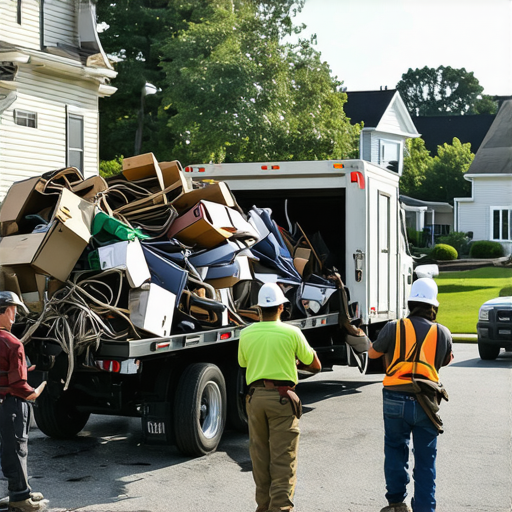
Unlicensed junk haulers in Aurora Illinois often lack general liability insurance and worker compensation coverage, creating a legal risk for homeowners who may be liable for injuries or illegal dumping fines occurring during a furniture removal project. If a guy breaks his back carrying your dresser down your stairs and he doesn’t have workers comp, you are his new retirement plan. He will sue your homeowners insurance. If he dumps your furniture in a vacant lot in Eola, the city will trace it back to you. They look for mail, receipts, or even specific furniture styles that neighbors recognize. A professional team brings more than just a truck. They bring an insurance binder and a bond. We also bring a strategy for the tetris. We stack the heavy, flat items against the bulkhead. We put the crushable items on top. We use ratchet straps to ensure the load does not shift during transport on Route 25. A shifting load is a dangerous load. It can flip a truck or spill onto the highway. We take the physics of the road as seriously as the physics of the lift.
“The management of solid waste is a fundamental requirement of a functional society; failure to manage it results in the degradation of the public health.” – SWANA Guidelines
The heavy cost of keeping everything
Hoarder cleanouts in Aurora require logistical staging areas and biohazard awareness to manage the volumetric overflow of accumulated furniture and personal property that has become a structural risk to the residence. I once cleared a house where the junk was not just stuff. It was a structural hazard. We found the floor joists were bowing under the weight of 40 years of newspapers that had absorbed ten years of basement humidity. The furniture was literally sinking into the floor. In these cases, we have to shore up the structure before we can even begin removal. It is a slow, methodical process. We use respiratory protection because of the mold and the dust. This is not a weekend project for a homeowner. This is a technical recovery operation. We sort into three streams: donation, recycle, and landfill. Furniture that is still functional goes to local charities. We don’t want to landfill anything that still has life in it. But if the wood is rotted or the upholstery is infested, it goes to the burner or the pit. The carbon footprint of hauling low-grade plastics 500 miles often exceeds the impact of local, high-efficiency waste-to-energy incineration. This is the contrarian truth of the industry. Sometimes, the landfill is the most environmentally responsible choice for certain materials.
- Lead-acid batteries from old electronics
- Propane tanks and pressurized cylinders
- Paints, solvents, and liquid chemicals
- Fluorescent light tubes and mercury switches
- Tires and automotive parts
- Biohazardous materials or medical waste
The logistical end game
The job is not done when the truck pulls away. The job is done when the sweep is finished and the tipping receipt is filed. In Aurora, we have to be mindful of the weather. A rain-soaked sofa weighs three times as much as a dry one. If we are doing an appliance removal alongside the furniture, we have to cap the gas lines and manage the refrigerants. Older refrigerators contain CFCs that must be recovered by a certified technician. You cannot just vent them into the atmosphere. That is a violation of the Clean Air Act. We take these steps because we are professionals. We understand that junk removal is the final stage of the product life cycle. We are the ones who close the loop. Whether it is a single dresser or a full house cleanout, the methodology remains the same. Plan the lift. Execute the load. Verify the disposal. This is how we keep Aurora clean and how we keep our clients out of legal trouble. The next time you look at a heavy piece of furniture, do not just see a task. See a logistical puzzle that requires a veteran eye to solve correctly.