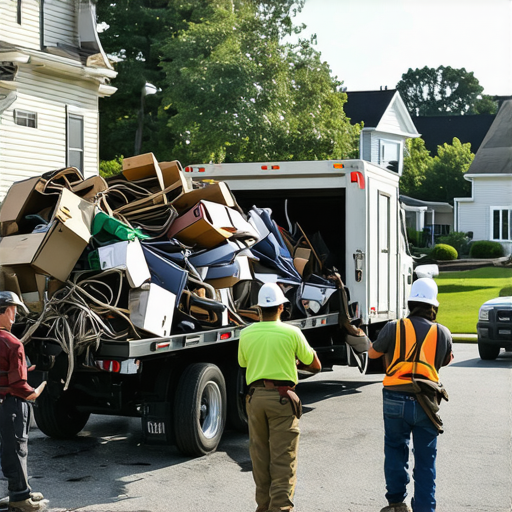

The air in the truck cab smells like stale coffee and hydraulic fluid. It is 6 AM on a Tuesday in Aurora. We are staring at a 15-yard dumpster that looks like a war zone. I think about the story of a business owner who tried to save 500 dollars by hiring a guy with a pickup truck from a social media ad. Two weeks later, the police called him because his company’s confidential files were found in a ditch. Your junk is your liability until it hits the scale. This is the reality of waste management in Colorado. It is not just about lifting heavy objects. It is about chain of custody. It is about the physics of cubing out a truck so that not a single square inch of air is wasted. If you leave air in the truck, you are losing money. If you mix hazardous materials with general waste, you are breaking the law. Professional junk removal in Aurora requires a deep understanding of local ordinances and the environmental impact of every single item we touch.
The ghost in the Aurora garage
Junk Removal Aurora services focus on the systemic extraction of unwanted materials while adhering to strict municipal codes and environmental diversion targets. Professional haulers evaluate the density of the load, the volume of the items in cubic yards, and the presence of hazardous materials before the first item moves. This process ensures that recyclable metals, usable furniture, and hazardous e-waste are routed to the correct facilities rather than the landfill. The City of Aurora has specific guidelines for what can hit the curb, and a professional service bridge the gap between residential clutter and industrial waste processing. I have seen what happens when people ignore these rules. They end up with fines or, worse, they contribute to the degradation of our local groundwater. The physics of a garage clean out is often underestimated. You are not just moving boxes. You are managing a legacy of forgotten utility. When we enter a space, we are looking at the stackability of the load. We are calculating the weight distribution over the rear axle of our trucks. A 15-yard dumpster can hold approximately 4.5 tons of material if packed correctly, but if you toss items in haphazardly, you hit the volume limit long before you hit the weight limit. This inefficiency is what I call the air tax. We do not pay for air. We pay for material.
Why your cheap hauler is a legal time bomb
Hiring unlicensed junk removal contractors in Aurora carries significant legal and financial risks including potential liability for illegal dumping and property damage. Many residents do not realize that they are responsible for their waste until it is legally processed at a transfer station or landfill. If a budget hauler dumps your old couch in a vacant lot near Colfax Avenue, the authorities will use the mail found in the cushions to track it back to you. This is why Hoarder Clean Out Aurora projects require a professional manifest. We document where every load goes. We use the Denver Arapahoe Disposal Site, known as DADS, and various transfer stations that provide weight tickets and disposal receipts. This is your insurance policy. It proves you followed the law.
“Waste is merely a resource in the wrong place; professional removal is the science of putting it back where it belongs.” – Disposal Industry Maxim
The heavy cost of keeping everything becomes apparent during a professional clean out. We see it in the floor joists of homes where old magazines have been stacked for decades. Paper is incredibly heavy when it absorbs the high humidity of a basement. A stack of newspapers three feet high exerts significant pressure on residential flooring. When we perform a Hoarder Clean Out Aurora, we are often managing structural risks alongside the material removal. We use respirators and heavy-duty gloves because of the biological hazards that thrive in stagnant piles of debris. This is not just cleaning. This is a tactical extraction.
The science of a community reuse event
Eco-friendly waste disposal in Aurora centers on maximizing the diversion rate of materials away from landfills through specialized reuse events and donation centers. These events are the front line of environmental protection. They allow residents to drop off items like electronics, paint, and chemicals that the city refuse trucks will not touch. A community reuse event is a logistical marvel. It requires sorting stations where items are categorized by material type. Wood, metal, plastic, and glass all have different recovery paths. For example, old wood furniture can be shredded for mulch or biomass fuel, while metal is sent to scrap yards where it is melted down and repurposed. This reduces the need for virgin mining. The carbon footprint of recycling a ton of aluminum is 95 percent lower than producing new aluminum from ore. This is why we prioritize sorting on-site during Furniture Removal projects. We look for the makers mark. If a piece of furniture is solid wood, it has a high probability of being refurbished. If it is particle board from a big-box store, it is likely destined for the waste-to-energy plant.
| Material Type | Decomposition Time (Years) | Recovery Potential (%) |
|---|---|---|
| Aluminum Cans | 200 | 95 |
| Plastic Bottles | 450 | 0-10 |
| Glass Bottles | 1,000,000 | 100 |
| Untreated Wood | 10-15 | 90 |
| Nylon Fabric | 30-40 | 20 |
Appliances and the heavy metal threat
Appliance removal requires specialized handling because of refrigerants like Freon and heavy metals that pose significant environmental risks if released. When we haul a refrigerator or an air conditioner in Aurora, we are dealing with the Clean Air Act. It is illegal to vent refrigerants into the atmosphere. We must transport these units to certified recovery facilities where the gases are sucked out and the metal is recycled. Old washing machines and dryers are simpler but still require significant physical labor. A standard top-load washer weighs about 150 pounds. A front-load model with a concrete counterbalance can weigh over 200 pounds. Moving these down a narrow staircase in an Aurora townhome requires a specific type of leverage and equipment. We use heavy-duty hand trucks with stair-climbing treads. We use padded straps to protect the walls. This is where the physics of the job meets the reality of customer service. One wrong move and you have a hole in the drywall or a broken toe. We do not take chances with gravity.
The heavy cost of keeping everything
The psychological and physical weight of clutter in residential spaces often necessitates professional intervention to restore safety and functionality. We see this most clearly in the garage. The Aurora garage is often the final resting place for broken dreams and half-finished projects. We find old paint cans that have rusted through, leaking toxic chemicals onto the concrete. We find stacks of tires that have become breeding grounds for mosquitoes. Garage Clean outs are about reclaiming territory. We start by categorizing everything into three piles. Keep, Donate, and Dispose. The dispose pile is then sub-divided into general waste and hazardous materials. Most people do not realize that things like pool chemicals, motor oil, and pesticides cannot be tossed into a standard dumpster. They require a trip to the Aurora Household Chemical Collection Center. This is the zooming logic we apply. We look at the microscopic hazards within the macroscopic mess.
Dumpster rentals and the permit trap
Dumpster Rentals Aurora residents utilize must comply with local right-of-way laws and weight limits to avoid significant municipal penalties. If you place a 20-yard dumpster on a public street in Aurora, you need a permit. If you block a fire hydrant or a sidewalk, the city will fine you within hours. We advise our clients on the placement of these containers. They must be on a level surface. They should ideally be on your driveway to avoid permit fees, but even then, you need to protect the concrete. A full 20-yard dumpster can weigh 10 tons. That weight can crack a standard residential driveway if it is not supported by wooden planks under the rollers. We calculate the load. We know that wet dirt weighs much more than dry wood. If you fill a dumpster with soil, you will exceed the weight limit of the truck before the container is half full. This is a common mistake that leads to extra fees. We call it bottom-loading. You have to balance the heavy material with light debris to ensure the truck can legally lift the load.
“Effective waste management represents the final boundary between public health and environmental catastrophe.” – SWANA guidance
The inventory of the prohibited
Professional junk removal teams are legally barred from hauling certain hazardous materials due to federal safety regulations and landfill restrictions. This is the part of the job that frustrates customers the most, but it is the most vital for safety. We are not allowed to haul materials that are explosive, corrosive, or highly flammable. This includes things like ammunition, gasoline, and pressurized tanks. If a propane tank is hidden in a pile of yard waste, it could explode in the back of the truck when the compactor is engaged. I have seen the damage a small canister can do to a hydraulic system. It is not pretty. We have a checklist that every customer must review before we start the job. This ensures total transparency and safety for our crew and the public.
- Wet paint and solvent-based stains
- Automotive fluids like oil, antifreeze, and brake fluid
- Pesticides, herbicides, and fertilizers
- Propane tanks and fire extinguishers
- Lead-acid batteries from cars or backup power systems
- Asbestos-containing materials from old renovations
- Medical waste including sharps and biohazards
The physics of the pack
The efficiency of a junk removal operation depends entirely on the volumetric stacking strategy employed by the loading crew. We call this the Tetris method. We start with the flat, heavy items at the bottom. This creates a stable base. We then verticalize items like mattresses and couches to save floor space. The goal is to reach the ceiling of the truck with every load. Every cubic foot of air is a failure of logic. If we are hauling a Hoarder Clean Out Aurora, the material is often loose and irregular. We use industrial-grade bags and bins to contain the small items, which allows us to stack them more efficiently. We are also conscious of the center of gravity. A top-heavy truck is a rollover risk on the curves of I-225. We keep the weight low and centered. This is the difference between a professional service and a guy with a trailer. We understand the engineering of the haul.
The final tally on Aurora waste
The logistics of waste management in Aurora are a reflection of our values as a community. We can choose to bury our problems, or we can choose to recover our resources. When you call for Junk Removal Aurora, you are participating in a complex industrial process. You are ensuring that your old appliances do not leak chemicals into the soil. You are ensuring that your furniture finds a new home or is recycled into a new product. You are protecting yourself from legal liability and protecting your home from structural damage. The process is loud, it is heavy, and it is often dirty, but it is necessary. We will continue to navigate the narrow streets and the strict regulations of the waste territory. We will continue to fight the air tax and the illegal dumpers. Because at the end of the day, a clean space is not just about aesthetics. It is about a functional, sustainable local economy. Every yard of waste diverted is a victory for the city. Every ton of scrap metal recycled is a win for the planet. We are the guardians of the exit strategy. We make sure the junk stops here.