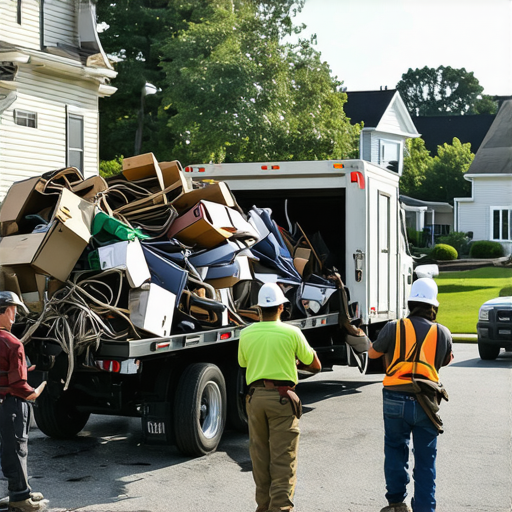

A business owner tried to save 500 dollars by hiring a guy with a pickup truck from a social media ad. Two weeks later, the police called him because his company’s confidential files and old office furniture were found in a ditch near the Cherry Creek spillway. Your junk is your liability until it hits the scale at a certified transfer station. I have spent twenty five years watching the physics of waste management evolve. I smell diesel and hydraulic fluid every morning. I see the world in cubic yards. In 2026, the logistics of charity donations in Aurora have shifted toward extreme liability mitigation. Charities are no longer a universal solution for your garage clean outs or hoarder clean out aurora projects. They have become selective processors of high value goods, leaving the heavy lifting and the hazardous disposal to the professionals. This evolution is driven by the Resource Conservation and Recovery Act and the rising costs at the Denver Arapahoe Disposal Site. If you are planning a junk removal Aurora mission, you must understand the rejection list before you load the truck.
The illegal dumping trap that starts with a donation
Aurora charities like Goodwill and Habitat for Humanity will reject CRT televisions, stained mattresses, and unsealed chemicals because tipping fees and environmental regulations make them a financial liability. In 2026, these organizations prioritize inventory turnover over community recycling, meaning your furniture removal must meet retail standards. Logistics dictate that a charity cannot spend 80 dollars to dispose of a 10 dollar item. When a charity truck pulls up to your driveway, they aren’t looking at your generosity. They are looking at the volume density of the items. They are calculating the man hours required to move a heavy armoire versus the potential resale value. If the math doesn’t work, the item stays on your curb. This is the reality of the 2026 waste stream. The Solid Waste Association of North America has noted that the cost of handling bulky items has increased by forty percent over the last three years. This cost is passed directly to the donor through stricter acceptance policies.
“Waste is merely a resource in the wrong place; professional removal is the science of putting it back where it belongs.” – Disposal Industry Maxim
Televisions that outlive their welcome
Electronic waste containing cathode ray tubes or mercury backlighting is now strictly prohibited from Aurora charity drop off zones due to EPA hazardous material guidelines. In 2026, the e-waste recycling market in Colorado has reached a saturation point where charities must pay a premium for every pound of glass processed. A single CRT television contains up to eight pounds of lead. If a charity accepts this, they are essentially accepting a hazmat bill. We see this often during junk removal aurora calls. A homeowner thinks they are doing a good deed by donating a 2005 flat screen, but the internal capacitors and flame retardant plastics make it a recycling nightmare. The logistics of cubing out a truck with electronics is also a headache. You cannot stack them safely without high risk of breakage, which releases toxic dust into the warehouse. Professional junk removal services utilize specialized e-waste downstream partners who shred these units in vacuum sealed environments to recover rare earth metals. Charities simply do not have the infrastructure for this logistical complexity.
The soft furniture exclusion zone
Furniture removal in Aurora has become a battle against biological contaminants and bedbug liability which forces non-profits to reject any upholstered items with even minor wear. By 2026, the insurance premiums for charities have spiked so high that a single insect infestation in a warehouse can bankrupt a local chapter. When we handle a hoarder clean out aurora, we often find couches that look fine but are structurally compromised. Moisture from basement humidity seeps into the foam, creating a microbial soup. A charity volunteer isn’t equipped to perform a forensic analysis on your sectional. They will see a water mark and walk away. This leaves you with a 200 pound logistical problem. A standard king mattress weighs about 150 pounds when dry, but if it has absorbed moisture, that weight can double. The physical strain on charity staff is another reason for these rejections. They are moving toward hard surface furniture only. Metal bed frames, wooden tables, and plastic chairs are still welcome, but anything with a zipper or a cushion is a high risk asset.
Liquids that turn a charity into a hazmat site
Household hazardous waste such as old paint, motor oil, and pesticides are legally classified as RCRA regulated materials that no Aurora charity is licensed to accept. In 2026, the dumpster rentals Aurora market has seen a surge in prohibited item fines because people try to hide these liquids at the bottom of a bin. One gallon of spilled oil can contaminate a million gallons of water. Charities know this. If a donation bin has a leak, the entire site must be shut down for a hazmat cleanup. I have seen rookie haulers lose their eyebrows because they didn’t check for propane tanks inside a pile of yard waste. Charities have implemented a zero tolerance policy for anything in a liquid state. This includes cleaning supplies and pool chemicals. Even if the bottle is sealed, the liability of it breaking during transport is too high. You need to look toward municipal hazardous waste collection events or specialized junk removal Aurora teams who carry the proper manifests for chemical transport. The paperwork alone for moving five gallons of industrial grade solvent is more than a charity’s entire daily operating budget.
Structural failures in composite wood
Particle board furniture and flat pack desks that have been disassembled or show signs of structural bowing are now universally rejected by Aurora donation centers. By 2026, the secondary market for pressed wood has collapsed because the glue used in these items often contains formaldehyde, which off gasses over time. When you take a cheap desk apart, the screw holes strip. It will never be stable again. A charity cannot sell a desk that might collapse on a child’s legs. We categorize these items as C and D waste (Construction and Demolition). In a garage clean outs scenario, these items often get wet. Once particle board gets wet, it expands like a sponge. It loses all structural integrity. It becomes heavy, useless, and prone to mold. While you might see it as a functional desk, a logistics expert sees it as a pile of sawdust and toxic resin that needs to be incinerated. The BTU potential of burning treated wood is high, but the emissions are nasty. Professional appliance removal and furniture removal crews usually take these straight to a waste to energy plant rather than a landfill.
Safety regulations that kill car seat donations
Infant car seats and cribs manufactured before 2024 are now on the permanent rejection list for all Aurora charities due to Consumer Product Safety Commission updates. In 2026, the legal liability of a recalled item being sold at a thrift store is a death sentence for the organization. Plastics degrade. A car seat that has sat in a hot Aurora garage for three years has microscopic fractures in the frame. In a collision, that plastic will shatter instead of absorbing the impact. Charities do not have the time to check every serial number against the national recall database. This is why you see so many of these items left in dumpster rentals Aurora or on the side of the road. It is a tragedy of waste, but safety is non negotiable. Even high end brands are rejected if the expiration date has passed. If you are doing a hoarder clean out aurora and find a stash of baby gear, do not even bother calling the non profits. These items must be dismantled, the straps cut, and the components recycled separately to ensure they never enter the market again.
Biohazards disguised as medical aid
Used medical equipment like CPAP machines, hospital beds, and wheelchairs with fabric components are now rejected by Aurora charities to prevent the spread of antibiotic resistant bacteria. In 2026, the sanitization protocols required to legally resell medical devices are cost prohibitive for local charities. A hospital bed is a logistical nightmare. It weighs 400 pounds, contains hydraulic fluid, and has dozens of pinch points. If it was used in a home with a staph infection, it is a biohazard. Junk removal Aurora specialists often have to wear PPE when clearing these items from hoarder situations. The risk of sharps or bloodborne pathogens hidden in the crevices of a motorized wheelchair is too great for a volunteer staff. While these items are expensive to buy new, their resale value in a thrift shop is nearly zero because of the sanitization stigma. It is more efficient to strip the aluminum and steel for scrap metal than to attempt a donation.
Freon and the high cost of cooling
Appliances containing refrigerants like Freon or Puron are strictly rejected by Aurora charities unless they come with a certified technician’s seal of evacuation. In 2026, the Clean Air Act enforcement has tightened, and venting refrigerant into the atmosphere carries a 60,000 dollar fine per day. When you need appliance removal, you are paying for the environmental compliance. A charity cannot risk a leak in their warehouse. A standard refrigerator contains about 5 to 8 ounces of refrigerant. If that unit is moved by someone who isn’t a heavy load specialist, the cooling lines can snap. Beyond the chemicals, the density of these units is a problem. A Sub-Zero fridge can weigh 600 pounds. It requires specialized dollies and a hydraulic lift gate. Most charity trucks are not equipped for heavy lift logistics. They prefer small appliances like toasters or blenders that fit into a standard tote. If you have a deep freezer in the basement, a junk removal Aurora team is your only legal and safe bet.
The Logistics of Disposal in Aurora
| Material Category | Decomposition Time | 2026 Tipping Cost (Est.) | Recovery Potential |
|---|---|---|---|
| Untreated Wood | 1-3 Years | $75/Ton | High (Mulch/Fuel) |
| Upholstered Couch | 50-80 Years | $110/Ton | Low (Landfill) |
| CRT Television | 1,000+ Years | $0.50/lb (Hazmat) | Medium (Glass/Lead) |
| Composite Furniture | 20-40 Years | $85/Ton | Very Low (Toxic) |
| Steel Appliances | 50-100 Years | $0 (Scrap Value) | High (Recyclable) |
Items Your Hauler Cannot Legally Touch
- Ammunition and Explosive Ordnance
- Radioactive Materials (Old Smoke Detectors)
- Leaking Lead-Acid Car Batteries
- Medical Sharps and Bio-Waste
- Industrial Solvents in Unmarked Drums
- Pressurized Cylinders with Unknown Contents
“Environmental stewardship is not an option; it is a logistical requirement for the 21st century.” – SWANA Guidelines
While many people believe recycling is always the superior choice, the carbon footprint of hauling low grade plastics five hundred miles to a specialized plant often exceeds the impact of local, high efficiency waste to energy incineration. In Aurora, we are lucky to have access to advanced transfer stations that sort materials with optical scanners. This means your junk removal project can actually be more eco friendly if you go through a commercial hauler than if you try to donate items that will eventually be thrown in the charity’s dumpster. When a charity throws away your rejected donation, it goes into a mixed waste stream with no recovery. When a pro hauler takes it, we source separate. We pull the scrap metal, we stack the cardboard, and we ensure the hazmat is handled. The final tally is simple. If it’s not in mint condition, don’t donate it. You are just moving your disposal fee onto a non-profit’s balance sheet. Be a responsible neighbor in Aurora. Manage your volume, respect the tipping fees, and keep the creeks clean of illegal dumping.