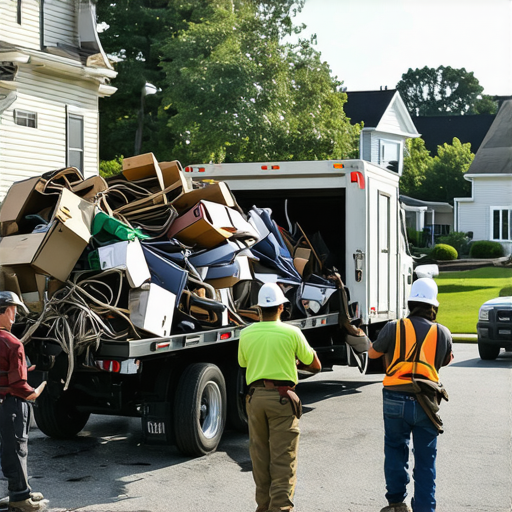
![6 Costly Appliance Removal Mistakes to Avoid in Aurora [2026]](https://aurorailjunkremoval.com/wp-content/uploads/2026/03/6-Costly-Appliance-Removal-Mistakes-to-Avoid-in-Aurora-2026.jpeg)
The smell of hydraulic fluid and diesel exhaust defines my mornings. I have spent twenty five years watching people treat waste management as an afterthought. It is not an afterthought. It is a logistical puzzle involving weight distribution, chemical hazards, and legal liability. In Aurora, the high plains wind can turn a poorly secured load into a highway disaster in seconds. If you think appliance removal is just about lifting a heavy box, you are prepared to lose money. Real money. I see it every day at the scale house. People arrive with trucks loaded so poorly they waste half the cubic volume. Or worse, they arrive with hazardous materials that get them turned away and fined. This guide is built on two decades of grit. It is built on the science of junk removal Aurora residents need to understand to survive the 2026 regulatory environment.
The dangerous surprise in the backyard
I watched a rookie almost lose his eyebrows because a customer hid a half-full propane tank inside a pile of ‘harmless’ yard waste. We do not just lift; we inspect. Every. Single. Item. We were clearing a property near Cherry Creek State Park. The homeowner had piled brush over an old grill and three rusted refrigerators. As the grapple arm compressed the load, the hiss of escaping gas cut through the engine roar. We stopped just before a spark from the metal-on-metal friction could ignite the pocket of propane. That is the reality of this business. People hide things. Sometimes it is intentional to save a buck. Often it is just laziness. Both are lethal. When you handle appliance removal, you are handling pressurized systems and toxic chemicals. If you do not treat the load with respect, the load will not respect you. The floor snapped under the weight of an uninspected washing machine filled with stagnant water. We learned that lesson twenty years ago. You should learn it now.
The phantom cost of hidden refrigerants
Appliance removal in Aurora requires strict adherence to EPA Section 608 regulations regarding refrigerant recovery. Failing to verify that your hauler uses certified technicians to evacuate Freon, R-22, or R-134a leads to massive federal fines. Professionals must document the legal disposal of these ozone-depleting substances before the metal shell hits the scrap yard. If you leave an old fridge on the curb, you are responsible for the chemicals inside. In 2026, the fines for illegal venting have tripled. The EPA does not care if you did not know. The chemical leaching of old cooling units is a nightmare for local groundwater. When a cooling line snaps, that gas hits the atmosphere. It contributes to a cycle of environmental damage that we are still trying to quantify. A 15-yard truck can only hold so many units before the weight of the compressors exceeds the axle limit. You must calculate the density. An average refrigerator weighs between 200 and 400 pounds. If you stack them poorly, you create a top-heavy load that will flip a trailer on a tight turn near E-470. I have seen the wreckage. It is not pretty. You pay for the expertise of someone who knows how to recover those gases safely.
“Waste is merely a resource in the wrong place; professional removal is the science of putting it back where it belongs.” – Disposal Industry Maxim
Ignoring the physics of the threshold
Structural damage during furniture removal or appliance extraction occurs when homeowners fail to measure the clearance of door frames and the load-bearing capacity of stairs. Professional haulers use specialized dollies and floor protection to prevent gouging hardwoods or cracking tile. Mistakes here often cost more than the removal service itself. The physics of a 400lb cast iron stove are unforgiving. If you tip it the wrong way, the center of gravity shifts. It will crush a foot. It will punch a hole through drywall. I have seen amateur movers try to ‘walk’ a washing machine across a linoleum floor. The result is always the same. The floor tears. The subfloor gets gouged. Now you have a three thousand dollar repair bill to save eighty dollars on a professional crew. We use 1/4 inch plywood runners. We use shoulder dollies. We understand that a 32-inch wide refrigerator does not fit through a 30-inch door frame without removing the handles. It sounds simple. It is not. You have to account for the swing of the hinge. You have to account for the threshold height. If you do not, you are just breaking things. Junk removal Aurora services are about precision, not just power.
The illegal dumping trap for businesses
Hiring an unlicensed hauler for dumpster rentals Aurora or appliance removal creates a chain of liability that ends with the property owner. If your junk is found in a ditch, your name is on the paperwork or the serial numbers. Local law enforcement uses these identifiers to issue heavy citations for environmental crimes. A business owner tried to save money by hiring a guy with a pickup truck from a social media ad. Two weeks later, the police called him because his company’s confidential files and three old water heaters were found in a ravine. Your junk is your liability until it hits the scale at a licensed transfer station. You must demand a receipt from the landfill or the recycling center. If they cannot produce a weight ticket, they are dumping it illegally. The ‘curbside cowboy’ is the enemy of this industry. They underbid us because they do not pay tipping fees. They do not have insurance. They do not have workers’ comp. When they drop a dryer on their toe on your property, they sue you. That is the cost of ‘cheap’.
The heavy cost of keeping everything
Hoarder clean out Aurora projects often reveal that the long-term storage of appliances leads to structural failure and pest infestations. Appliances left in damp garages or basements become breeding grounds for rodents that chew through wiring, creating significant fire hazards. Early intervention and professional removal are the only ways to mitigate these risks. I once cleared a house where the junk was not just stuff. It was a structural hazard. We found the floor joists were bowing under the weight of 40 years of newspapers that had absorbed ten years of basement humidity. The appliances were the worst part. Old freezers had leaked putrid liquid into the floorboards for years. The wood was pulp. We had to use bracing just to walk across the room. This is the data overflow error of the physical world. People keep things because they might ‘fix them’ later. They never do. The BTU potential of the recovered wood waste in those homes is high, but the cost of extraction is higher. You are paying for the risk. You are paying for the hazmat suits. You are paying for the fact that my guys have to breathe in decades of decay.
“The most expensive way to store an item is to keep it after it has lost its utility; you pay in space, safety, and sanity.” – SWANA Technical Bulletin
Failing to disconnect utility lines
Improperly disconnected gas and water lines during appliance removal lead to catastrophic house fires and water damage. In Aurora, local codes require specific shut-off protocols for natural gas ranges and clothes dryers. Never assume a valve is fully closed without testing it for leaks using a soap solution or an electronic sniffer. I have seen houses flooded because a homeowner thought the hand valve on a washing machine was tight. Those valves fail. They calcify. You pull the hose, and five minutes later, the basement is a swimming pool. Gas is worse. A slow leak from an old range connection can fill a kitchen in an hour. One spark from a light switch and the house is gone. We carry pipe caps. We carry thread sealant. We do not trust your valves. We trust our plugs. This is the difference between a guy with a truck and a logistics specialist. We look at the connection points as potential failure nodes. We manage the risk before we move the weight.
The logistical math of disposal
Understanding how you are charged is the only way to avoid being ripped off. Most people do not understand the difference between volume and weight. A truck filled with old pillows is light but takes up space. A truck filled with three refrigerators and a dishwasher is heavy but might look empty.
| Disposal Method | Cost Basis | Pros | Cons |
|---|---|---|---|
| Full Service Removal | Cubic Yardage | Zero physical labor, high safety | Higher upfront cost |
| Dumpster Rental | Tonnage + Rental Fee | Good for long projects | Permit requirements, driveway damage |
| Municipal Pickup | Flat Fee per Item | Cheapest option | Strict limits, no indoor labor |
| Scrap Metal Haulers | Free or Low Cost | Saves metal from landfill | Unreliable, no hazmat handling |
In Aurora, the tipping fees at the local transfer stations are calculated by the ton. If a hauler quotes you by the ‘truckload,’ you need to know the size of the truck. A 10-yard truck is not a 20-yard truck. You are paying for the air if they do not know how to stack. We call it ‘cubing out.’ You want the load to be tight. You want the heavy items on the bottom to lower the center of gravity. This is the tetris of the trade. If you leave gaps, you are burning money. The carbon footprint of hauling low-grade plastics 500 miles often exceeds the impact of local, high-efficiency waste-to-energy incineration. We consider these variables. We look at the diversion rates. We want as much metal as possible to go to the smelter, not the hole in the ground.
Items your hauler cannot legally touch
You need to be aware that certain items are restricted by law. Do not try to sneak these into a garage clean out or an appliance pile.
- Lead-acid batteries (found in backup power systems)
- Propane tanks or pressurized cylinders
- Paints, solvents, and industrial thinners
- Asbestos-containing insulation found in old water heaters
- Mercury-containing thermostats
- Fluorescent ballasts and tubes
- Ammunition or explosives
If we find these in the middle of a load at the landfill, we get a surcharge. We pass that surcharge to you. It is better to be honest upfront. Most Aurora residents can take these items to specialized hazardous waste collection events. Do not put them in a dumpster. The hydraulic press in a trash truck will rupture a paint can or a battery. It will spray the street. It will start a fire in the hopper. I have seen a truck dump a flaming load in the middle of a residential street because a homeowner hid pool chemicals in the trash. It is a logistical nightmare. It is a safety failure. We avoid it by being meticulous. We avoid it by knowing the law. Your appliance removal should be clean, efficient, and legal. Anything less is a gamble you will eventually lose.
This post really highlights how complex appliance removal can be beyond just having a truck and a strength to lift heavy items. I agree that proper inspection and handling are often overlooked, leading to safety hazards and unexpected costs. I recently saw someone try to haul away an old water heater without disconnecting the gas line properly, and it resulted in a messy leak that could have been avoided with some basic preventive measures. The part about refrigerant management also resonated with me—it’s easy to forget how regulated this process is, yet the environmental impact of improper venting is huge.
In my experience, the key is always thorough planning and knowing what each item requires. Have any other readers faced issues with hidden hazards in their junk piles? What measures did you take to ensure safety and compliance? It seems like hiring licensed professionals isn’t just about convenience but about peace of mind, especially when dealing with such potentially dangerous materials.
Reading this post made me realize just how important professional junk removal is beyond the superficial layer of hauling stuff away. I’ve seen folks underestimate the risks of hidden hazards, especially when it comes to old appliances with refrigerants or pressurized tanks. In one instance, a friend tried to do a backyard cleanout himself, and he didn’t think to check for gas leaks or chemical containers. Fortunately, nothing serious happened, but it was a close call. It made me wonder, how often do people overlook these hidden dangers when attempting to save costs?
From my experience, even small things like properly disconnecting utility lines can prevent major accidents and property damage. I’d love to hear from others: what steps do you take to ensure your removal process is both safe and compliant with local laws? Also, do you have tips for identifying potential hazards before the professionals arrive? It seems like thorough preparation and awareness can make all the difference in avoiding hefty fines, injuries, or environmental issues.
This post really brings to light the intricate and often overlooked aspects of appliance removal that go far beyond just hauling heavy items. I’ve personally seen how improper handling of refrigerants can lead to costly fines and environmental damage, especially when dealing with older appliances that many homeowners neglect to inspect thoroughly. What I find most compelling is the emphasis on the logistics and physics involved—things like weight distribution, clearance, and utility line disconnection—that require expert knowledge to avoid costly mistakes. It makes me think about the importance of choosing licensed, experienced professionals for these jobs rather than trying to cut costs with unlicensed or haphazard methods. Have others here encountered issues with uninspected items, or worse, hazardous materials that could have been easily avoided with proper pre-removal checks? It’s a reminder that careful planning and compliance not only protect us legally but also prevent dangerous situations and environmental harm.
This post really underscores the importance of professional handling when it comes to appliance removal, especially in locations like Aurora where regulatory and safety concerns are high. I’ve personally seen how neglecting the inspection step can lead to serious accidents, like gas leaks or electrical hazards, which could have been prevented with a thorough approach. I think one area that often gets overlooked is the importance of utility disconnection. Homeowners sometimes assume that turning off a valve is enough, but in reality, testing for leaks with proper tools is key. Have any other readers found effective ways to verify utility disconnection before the professionals arrive? Additionally, the environmental impact of refrigerants makes this a critical area, not just legally but ethically. It’s reassuring to know that licensed haulers handle these chemicals properly, but how do you ensure your contractor’s credentials are up to date? It seems like a small step that can save a lot of trouble later.